
-
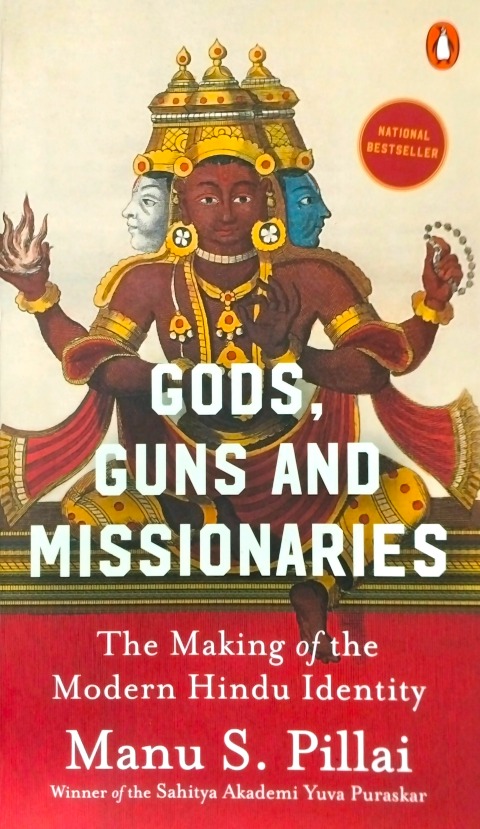
Gods, Guns & Missionaries
When European missionaries first arrived in India in the sixteenth century, they entered a world both fascinating and bewildering. Hinduism, as they saw it, was a pagan mess: the worship of devils and monsters by a people who burned women alive, performed outlandish rites and fed children to crocodiles. But soon it became clear that Hindu ‘idolatry’ was far more complex than white men’s stereotypes allowed, and Hindus had little desire to convert. But then, European power began to grow in India, and under colonial rule, missionaries assumed a forbidding appearance. During the British Raj, Western frames of thinking gained ascendancy and Hindus felt pressed to reimagine their religion. This was both to fortify it against Christian attacks and to resist foreign rule. It is this encounter which has, in good measure, inspired modern Hinduism’s present shape. Indeed, Hindus subverted some of the missionaries’ own tools and strategies in the process, triggering the birth of Hindu nationalism, now so dominant in the country. In Gods, Guns and Missionaries, Manu S. Pillai takes us through these remarkable dynamics. With an arresting cast of characters―maharajahs, poets, gun-wielding revolutionaries, politicians, polemicists, philosophers and clergymen―this book is ambitious in its scope and provocative in its position. Lucid and exhaustive, it is, at once, a political history, a review of Hindu culture and a study of the social forces that prepared the ground for Hindu nationalism. Turning away from simplistic ideas on religious evolution and European imperialism, the past as it appears here is more complicated―and infinitely richer―than popular narratives allow.
-

Rebel Sultans
Deftly and with great vividness, Manu S. Pillai takes us through 400 years of roiling history and returns the Deccan to the centre of our attention – where it belongs.’ SUNIL KHILNANI ‘Minutely researched and yet instantly accessible . . . Rebel Sultans will bring the fascinating history of the medieval Deccan to a whole new generation of readers.’ WILLIAM DALRYMPLE ‘In this lively study, Manu S. Pillai does a superb job of re-orienting the narrative of late medieval and early modern South Asia towards the Deccan.’ MUZAFFAR ALAM ‘In Rebel Sultans, the Deccan is presented in seven engaging chapters, each focused on a pivotal moment, character or symbol, that together trace the dynamic history of the region and convey its unique flavour.’ NAVINA NAJAT HAIDAR In 1707 when Emperor Aurangzeb went to his grave, the Mughal empire began to crack into a hundred fractured pieces. It was the lure of the Deccan that drained this conqueror’s energies, putting him on a course of collision with his most threatening adversaries. After all, the Deccan was a land that inspired wonder. Its treasures were legendary, and its kings magnificent. It was a horizon of rousing adventure, attracting talent from beyond oceans. A traveller here could encounter bands of European snipers, available for military hire, or forbidding fortresses where African nobles scaled the heights of power. Diamonds and pearls lay heaped in the Deccan’s bazaars, while in its courts thrived Persians and Marathas, Portuguese and Georgians, presiding over a world of drama and betrayal. A thousand fortunes were made in the Deccan, drawing the formidable envy of generations of Mughal emperors. In Rebel Sultans, Manu S. Pillai narrates the story of the Deccan from the close of the thirteenth century to the dawn of the eighteenth. Packed with riveting tales and compelling characters, this book takes us from the age of Alauddin Khilji to the ascent of Shivaji. We witness the dramatic rise and fall of the Vijayanagar empire, even as we negotiate intrigues at the courts of the Bahmani kings and the Rebel Sultans who overthrew them. From Chand Bibi, a valorous queen stabbed to death, and Ibrahim II of Bijapur, a Muslim prince who venerated Hindu gods, to Malik Ambar, the Ethiopian warlord, and Krishnadeva Raya on Vijayanagar’s Diamond Throne – they all appear in these pages as we journey through one of the most arresting sweeps of Indian history. Unravelling a forgotten chapter in our medieval past, Rebel Sultans reminds us of a different age and a different time in the Deccan – one that ended an empire and rewrote India’s destiny.
-
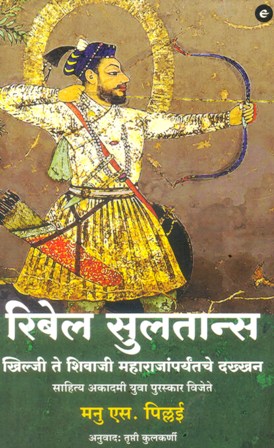
Rebel Sultans (रिबेल सुलतांस)
रिबेल सुलतान्स हे एक नेत्रदीपक कथन आहे. पिल्लई यांनी आपल्या अत्यंत प्रभावी अशा कल्पनाशक्तीचा आणि उत्तुंग शब्दप्रतिभेचा वापर करून एक अस्सल थरारक पुस्तक लिहिले आहे. हे पुस्तक एकदा वाचायला सुरुवात केल्यावर संपल्याशिवाय थांबणे अशक्य आहे.- इंडियन एक्सप्रेस आपल्या प्रतिभासंपन्न आणि रसाळ शैलीने पिल्लई आपल्या वाचकांना मंत्रमुग्ध करतात...- द हिंदू रिबेल सुलतान्स, या पुस्तकामध्ये मनु पिल्लई यांनी तेराव्या शतकाच्या अंतापासून अठराव्या शतकाच्या आरंभापर्यंतची दख्खनची कथा सांगितली आहे. यात रंजक कथा आणि लक्षवेधी पात्रं यांची रेलचेल आहे. हे पुस्तक आपल्याला अल्लाऊद्दीन खिल्जीच्या युगापासून शिवाजी महाराजांच्या उदयापर्यंतचा प्रवास घडवते. त्या काळी दख्खन ही चमत्कारांना प्रेरणा देणारी भूमी होती. इथल्या खजिन्यांची, राजेलोकांची ख्याती दूरवर पसरली होती. ही भूमी समुद्रापल्याडच्या प्रतिभावंतांसाठी आकर्षणाचे केंद्र ठरत होती. दख्खन हे आवेशपूर्ण धाडसांचे क्षितिज होते. इथे येणाऱ्या प्रवाश्यांना लष्करात भरती करण्यासाठी उपलब्ध असणारी युरोपिअन नेमबाजांची पथके; हिऱ्यामोत्यांनी सजलेल्या बाजारपेठा पाहायला मिळत. इथल्या दरबारांमध्ये पर्शिअन, मराठे, पोर्तुगीज आणि जॉर्जिअन यांची भरभराट होत होती. दख्खनमध्ये शेकडो भवितव्ये रचली गेली, जी मुघल साम्राज्यांच्या असंख्य पिढ्यांच्या भीतीदायक असूयेस कारणीभूत ठरली. या पुस्तकात आपल्याला विजयनगर साम्राज्याचा नाट्यमय उदय आणि पाडावही पाहायला मिळतो; तसेच त्यांची सत्ता उलथून टाकणाऱ्या बहामनी राजांची आणि बंडखोर सुलतानांची षड्यंत्रेही पाहायला मिळतात. भारताच्या इतिहासातील मंत्रमुग्ध करणाऱ्या या काळाच्या प्रवासात आपल्यासमोर चांदबिबीसारख्या पराक्रमी राणीच्या हत्येसारखे थरारक प्रसंग, हिंदू देवतांची उपासना करणारा इब्राहिम दुसरा, मलिक अंबरसारखा इथिओपिअन सरदार आणि विजयनगरच्या हिरेजडित सिंहासनावर विराजमान झालेला कृष्णदेवराय अशी उल्लेखनीय ऐतिहासिक पात्रेही येतात. मध्ययुगीन भूतकाळातील विस्मरणात गेलेल्या प्रकरणावर प्रकाश टाकताना रिबेल सुलतान्स आपल्याला दख्खनमधील एका वेगळ्या युगाचे आणि एका वेगळ्या काळाचे स्मरण करून देते–एक असे युग ज्याने एका साम्राज्याचा अंत केला आणि भारताचे भविष्य नव्याने लिहिले.