


-
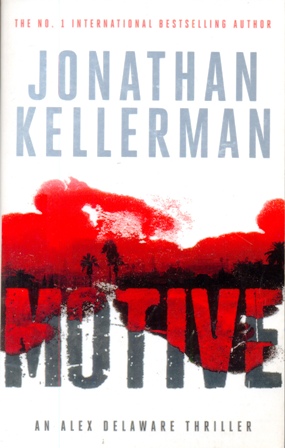
Motive
Even hundreds of closed cases to his credit can't keep LAPD police lieutenant Milo Sturgis from agonising over the crimes that don't get solved - and the victims who go without justice. Victims like Katherine Hennepin, a young woman strangled and stabbed in her home. A single suspect with a solid alibi leads to a dead end - one even psychologist Alex Delaware's expert insight can't explain. The only thing to do is move on to the next murder case - because there is always a next one. This time the victim is Ursula Corey, a successful, attractive divorcee who's been gunned down - not a robbery but an execution, a crime that smacks of simple, savage revenge. And along with that theoretical motive come two strong contenders for the role of suspect: the dead woman's business partner/ex-husband and her divorce lawyer/secret lover. But just as Alex and Milo think they're zeroing in on the killer, a bizarre new clue stirs up echoes of the unsolved Hennepin murder. And the discovery of yet another crime scene bearing the same taunting signature raises the spectre of a serial killer on a mission, whose twisted method is exceeded only by his manipulative and cunning madness.
-
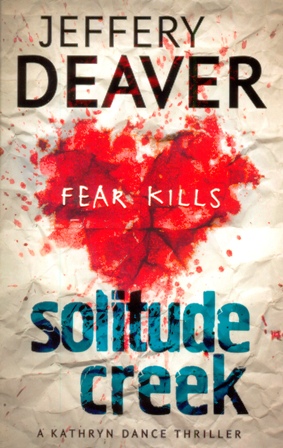
Solitude Creek
The fourth electrifying thriller in the Kathryn Dance series from master of suspense Jeffery Deaver. One mistake is all it takes. Busted back to rookie after losing her gun in an interrogation gone bad, California Bureau of Investigation Agent Kathryn Dance finds herself making routine insurance checks after a roadhouse fire. But Dance is a highly trained expert in body language: her most deadly weapon is her instinct, and they can't take that away from her. And when the evidence at the club points to something more than a tragic accident, she isn't going to let protocol stop her doing everything in her power to take down the perp. Someone out there is using the panic of crowds to kill, and Dance must find out who, before he strikes again . . .
-
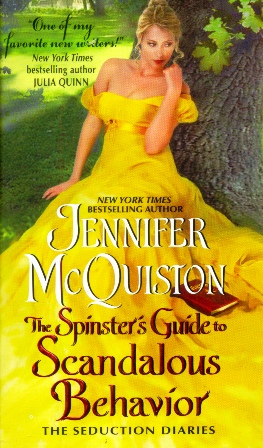
The Spinster's Guide to Scandalous Behavior
When her eccentric aunt suddenly dies and bequeaths her the key to a falling-down cottage in Cornwall, Lucy Westmore is surprised. After all, she scarcely knows her aunt, and her memories of Heathmore are murky, at best. But even more surprising is the part of Lucy's inheritance that doesn't come with a key: an old leather journal that provides the details of her mysterious aunt's life and-for better or worse-gives Lucy all the instructions she needs to live the life of a scandalous spinster. Lord Thomas Branston has spent the last five years in Cornwall, hiding from his painful past. Nothing has been tempting enough to lure him back to London until now. He alone knows the real value of the property, and he's determined to buy Heathmore before Miss Westmore ruins everything and sells it off to the highest bidder. Emboldened by the guidance in her aunt's diary, Lucy refuses to sell the property, not even when Lord Branston�s offers escalate, or when the house turns out to be truly uninhabitable. Lucy has no intention of giving up her one chance for independence. And Thomas has no intention of abandoning his suit. But is it the property or the spitfire of a spinster that�s got his heart all tied up? And what is he willing to offer for both?
-
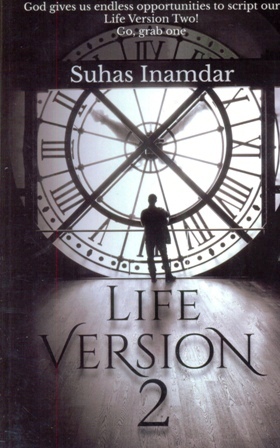
Life Version 2
Do millions of blurry notions about the ever-mystic subject of astrology intrigue you? Do you want to steer clear of all ambiguity that surrounds the mysterious phenomenon of life and death? Welcome to Life Version 2, a book that will surely unravel some of life’s biggest and the most intriguing questions. God gives us endless opportunities to script our Life Version 2! Go, grab one…… Abhijeet, 60, is a successful entrepreneur who leads a contented life. Cricket, music and astrology are his deep obsessions. His life is running smooth until an appalling prediction is made that he is going to die within the next six months! This turns his life upside down. He prepares to die and exhibits unprecedented boldness by trying to complete all his pending tasks before he departs from this world. In a strange twist of fate, he does not die as predicted. When he goes in search of the person responsible for making the spectacularly wrong prediction, he unearths a sinister plot. Who is behind this intriguing conspiracy? How does he look at life after his close brush with death? Can he ever live the same life again? Step aboard Life Version 2 and get set to experience the unknown, the very essence of life!
-
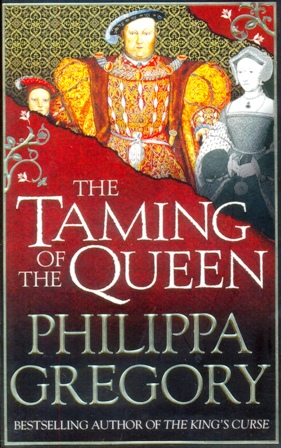
The Taming of the Queen
Why would a woman marry a serial killer? Because she cannot refuse Kateryn Parr, a thirty-year-old widow in a secret affair with a new lover, has no choice when a man old enough to be her father who has buried four wives - King henry VIII - commands her to marry him. Kateryn has no doubt about the danger she faces: the previous queen lasted sixteen months, the one before barely half a year. But Henry adores his new bride and Kateryn's trust in him grows as she unites the royal family, creates a radical study circle at the heart of the court, and rules the kingdom as Regent. But is this enough to keep her safe? A leader of religious reform and the first woman to publish in English, Kateryn stands out as an independent woman with a mind of her own. But she cannot save the Protestants, under threat for their faith and Henry's dangerous gaze turns on her.The traditional church-men and rivals for power accuse her of heresy - the punishment is death by fire and the king's name is on the warrant From an author who has described all of Henry's queens comes a deeply inti-mate portrayal of the last : a woman who longed for passion, power and educa-tion at the court of a medieval killer.
-
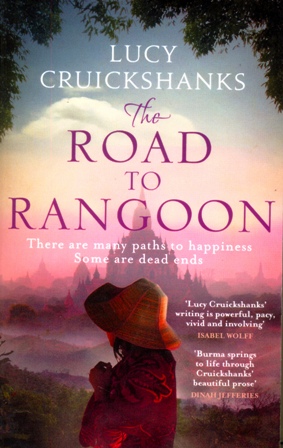
The Road to Rangoon
In 1980s Burma, the British ambassador's son goes missing.Discovered in the north of the country, Michael Atwood is in imminent danger, trapped between sides fighting a bitter civil war and with no way of getting back to Rangoon. His best hope of salvation is to trust Thuza, a ruby smuggler who offers to help him escape.Beautiful and deeply scarred, Thuza has spent her entire life in a frontier town between rebel and government forces, never choosing a side but trying to make a living from both. For Thuza, the ambassador's son is her ticket out of poverty. For Than, an ambitious military officer, exploiting those caught up in the war offers an opportunity for promotion and distinction.But as all three learn to their cost, in this exotic, enigmatic and savage country, everyone has a price.This is a tale of ambition, salvation and hope that confirms Lucy Cruickshanks as a master storyteller.
-
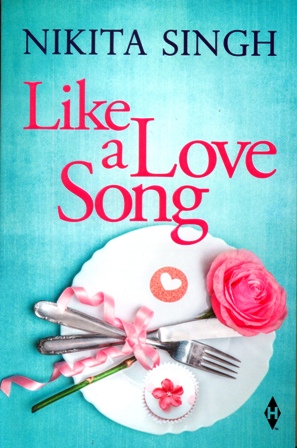
Like a Love Song
Love is a many - flavoured thing: it can go from vanilla to rainbow sprinkles in the blink of an eye. Four years ago, Maahi�s heart was broken into so many pieces that it looked like she might never put it back together again. Yet time has healed her wounds, and she has found her true calling - and even a dash or romance. But when the past comes knocking on her door, threatening to shatter a life she has carefully rebuilt, her world is turned upside-down. What will Maahi do when she is torn between her head and her heart? Emotionally charged and vivid, Like a Love Song is about the sort of love that consumes and sears you and the healing powers of true passion.
-
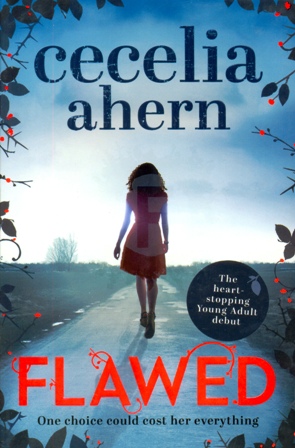
Flawed
The gorgeous, thought-provoking first YA novel from internationally bestselling author Cecelia Ahern. FLAWED is set in a powerfully realised society where perfection is valued above humanity,with an intense love story at its centre. Good-girl Celestine has always agreed with the system but following an act of kindness towards one of the Flawed is herself excluded and soon she is fighting for her own survival � and for love. Hugely accessible, emotionally resonant and with a character who will seize the hearts of anyone who meets her, this is the ideal book for anyone who has ever felt the pressure to be perfect.
-
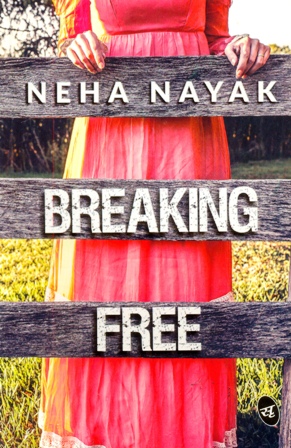
Breaking Free
After Noya calls off her wedding on the big day, she decides to travel. Alone. That's when she notices Ranbir, who is insistently and coincidently touring the same places that are on her itinerary. She tries her best to avoid him - thinking him to be either someone sent by her parents or a stalker - but whenever she falls into trouble during the journey, he is always there for her. When they meet at her NGO opening ceremony in Goa, she realizes he isn't a stalker after all. With time, friendship blossoms and she learns he is about to get married. She also gets to know that his bridetobe is a moneyloving imposter and wants to reveal her true intentions. Ranbir is drawn towards Noya and confesses his feelings, but she has other plans. As Ranbir invites Noya for a trek to the Himalayas, he wonders if this could be a journey to their hearts. Breaking Free is a cocktail of emotions, with the tanginess of love, care and friendship.
-
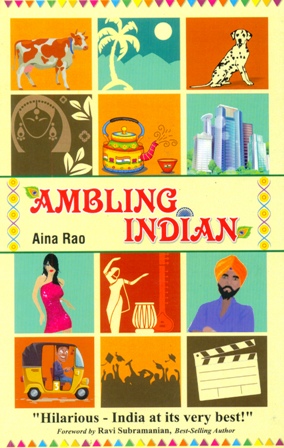
Ambling Indian
This book, a fun trip through India—with all the peculiar experiences of the country, has the ingredients to intrigue, the spice to savour, and the nuggets of reflection to delight! Meet the characters of Chand TV and Changa Times—Madam Chandni, Mr. Chatu, Mr. Raja Chata, voluptuous Ms. Kitry Kat; and the others—the boyfriend Runny Singh, Tinuji, swashbuckling Mr. Anal Manbee, Jamal and the Mangoman. Watch their lives intertwining with the young and lively Ambling Indian’s, as they navigate through the lanes, bylanes, gallis, and mohallas that make up much of India. Coast through Bollywood, the elite Indian Institutes of Technology and the Indian Institutes of Management—hallowed Oxbridges of the East; weddings, politics, and modern offices. Duck and dive as you avoid the cows, potholes, and street dogs. Celebrate the functions and everything else that is the substance of modern India; chaotic yet captivating. Sit back, brace yourself for a quirky, rollicking auto rickshaw ride, and lose yourself in time as you travel with the aam aadmi (the common man). Discover an India like you have never seen before— through the mirror of the Ambling Indian, Aina; who discovers an unknown side of herself too.
-
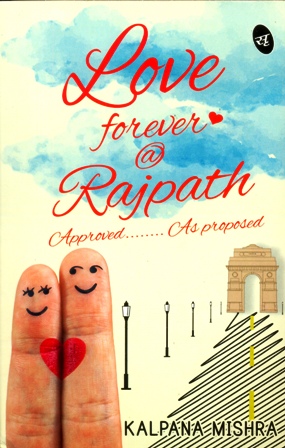
Love Forever @ Rajpath
True love can blossom anywhere, in a government set-up too and can be as permanent as the job itself. Shalini, a government employee, strongly feels that there is no point in getting married and joining the brigade of abused wives. Till she is swept off her feet by Kartik, a dynamic colleague from Bihar. Just when her faith in the system of love and marriage is rekindled and at its peak, Kartik goes missing. Her search for him reveals some dark secrets about Zabaria Shaadi still existing in Bihar, where eligible boys are abducted or forced for marriage. A love story at its core, Love Forever @ Rajpath highlights the predicaments of a girl on the verge of losing her most precious relationship. It also reflects the inner turmoil of a young boy sandwiched between age-old traditions and his own liberated opinions. Will Shalini be able to save her relationship? Will Kartik acknowledge her efforts or will he abandon her for the sake of his family?
-
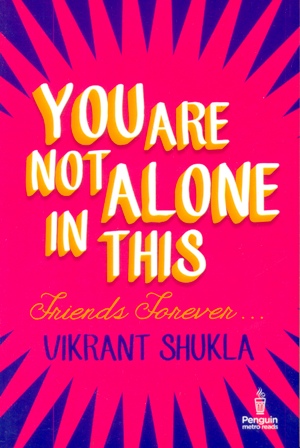
You Are Not Alone In This
When life takes a difficult turn, will your friends help? Daksh is a successful author. He has a loving wife, money, status - everything except a child. So when he meets his childhood friend Mahesh and his daughter, he is overjoyed. But his happiness is short-lived - he learns that Mahesh�s follies have thrown his family apart. Daksh wants to help his friend, more so for the sake of his little daughter. However, soon they are sucked into a racket of cheating, lies and deceit. And things are not as easy to sort as they first thought. You Are Not Alone in This is the story of the true test of friendship.
-
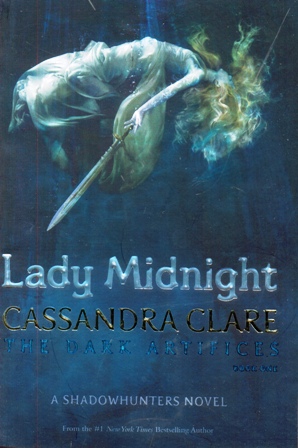
Lady Midnight
The Shadowhunters of Los Angeles star in the first novel in Cassandra Clare's newest series, The dark artifices, a sequel to the Internationally bestselling mortal instruments series. Lady midnight is a shadowhunters novel. It's been five years since the events of City of Heavenly Fire that brought the Shadowhunters to the brink of oblivion. Emma Carstairs is no longer a child in mourning, but a young woman bent on discovering what killed her parents and avenging her losses.Together with her parabatai Julian Blackthorn, Emma must learn to trust her head and her heart as she investigates a demonic plot that stretches across Los Angeles, from the Sunset Strip to the enchanted sea that pounds the beaches of Santa Monica. If only her heart didn't lead her in treacherous directions Making things even more complicated, Julian's brother Mark-who was cap-tured by the faeries five years ago-has been returned as a bargaining chip. The faeries are desperate to find out who is murdering their kind-and they need the Shadowhunters' help to do it. But time works differently in faerie, so Mark has barely aged and doesn't recognize his family. Can he ever truly return to them? Will the faeries really allow it? Glitz, glamours and Shadow hunters abound in this heartrending opening to Cassandra Clare's Dark Artifices series .
-
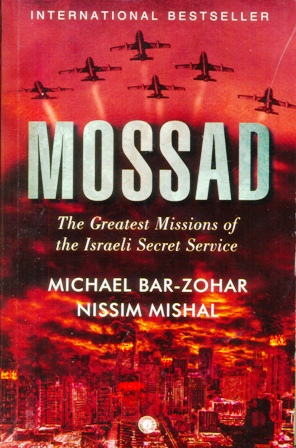
Mossad
The Greatest Missions of the Israeli Secret Service For decades, Israel's renowned security arm, the Mossad, has been widely recognized as the best intelligence service in the world. In Mossad, authors Michael Bar-Zohar and Nissim Mishal take us behind the closed curtain with riveting, eye-opening, boots-on-the-ground accounts of the most dangerous, most crucial missions in the agency's 60-year history. These are real, true Mission: Impossible stories brimming with high-octane action - right from the breath-taking capture of Nazi executioner Adolph Eichmann to the recent elimination of key Iranian nuclear scientists. If you are fascinated by the world of international espionage, intelligence, and covert "Black-Ops" warfare, then you will definitely find that the Mossad makes for some electrifying reading. Michael Bar-Zohar has fought in four Israeli-Arab wars, spent nine years beside David Ben-Gurion, Israel's founder, become a fervent supporter of peace between Israel and her neighbours and served two terms in Parliament. He has written over 30 books and also won several major awards for his screenplays. Nissim Mishal is one of the foremost TV personalities in Israel and the Director-General of Israeli state television. Apart from writing best-selling books about the history of Israel he has also co-authored a book on two thousand years of Judaism.