



-
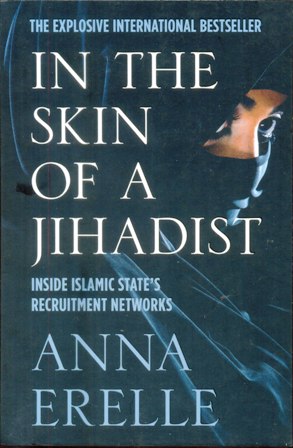
In The Skin Of A Jihadist : Inside Islamic State's
Anna Erelle is the undercover journalist behind Melodie.Created to investigate the powerful propaganda weapons of Islamic State, Melodie is soon sucked in by Bilel, right-hand man of the infamous Abu Bakr al-Baghdadi.An Iraqi for whose capture the US government has promised $10 million, al-Baghdadi is described by Time Magazine as the most dangerous man in the world and by himself as the caliph of Islamic State. Bilel shows off his jeep, his guns, his expensive watch. He boasts about the people he has just killed.With Bilel impatient for his future wife, Melodie embarks on her highly dangerous mission, which - at its ultimate stage - will go very wrong. Enticed into this lethal online world like hundreds of other young people, including many young British girls and boys, Erelles harrowing and gripping investigation helps us to understand the true face of terrorism.
-
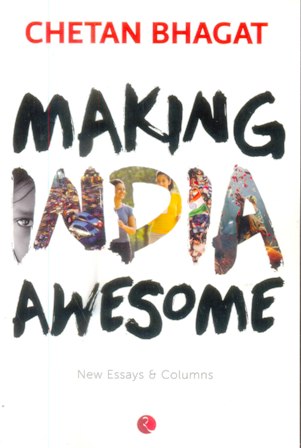
Making India Awesome
Love your country? Want to make it truly great? Tired of loud debates and complex arguments which lead to no solutions? Welcome to Making India Awesome. Following the phenomenal success of his first non-fiction book, What Young India Wants, Chetan Bhagat, the country's biggest-selling writer, returns with another book of essays in which he analyses and provides inspired solutions to the country's most intractable problems - poverty, unemployment, corruption, violence against women, communal violence, religious fundamentalism, illiteracy and more. Using simple language and concepts, this book will enable you to understand the most complex of problems facing the nation today and give you practical solutions on how you can do your part to solve them.
-
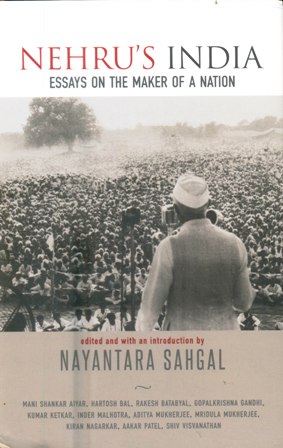
Nehru's India
For much of the countrys post-Independence history, Indian politics was dominated by a single towering figure: Jawaharlal Nehru. A leading figure of the Independence movement, and Mahatma Gandhis chosen successor, Nehru, as Indias first prime minister, from 1947 until his death in 1964, was the architect of its birth as a modern nation-state, a sovereign, socialist, secular and democratic republic. In this volume, some of our foremost thinkers and writers examine the different aspects of Nehrus personality and his legacy.Nehrus influence stretched beyond the Freedom Movement and the political and bureaucratic boundaries of prime ministerhood. A man of letters, it was Nehru who initiated the setting up of the Sahitya Akademi devoted to literature, the National School of Drama and the National Institute of Design; just as, in the field of technology and business management, he established the Indian Institutes of Technology and the Indian Institutes of Management across the country. He was equally the force behind the setting up of dams and factories, which he regarded as the temples of modern India Today, in the year of his 125th birth anniversary, the four key dimensions of Indian nationhood, as conceived and implemented by Nehru democracy, secularism, socialism and non-alignment have altered to a point where they have changed almost beyond recognition or even abandoned altogether. To quote Mani Shankar Aiyar, What needs examination is whether fifty years after he [Nehru] passed away, these are still the defining parameters of Indias contemporary nationhood and, if so, how should they be interpreted in the light of present circumstances? As the debate continues between Nehrus supporters who believe in his enduring contribution, and his detractors who attempt to deny it, the definitive word, perhaps, comes from Nayantara Sahgal, who says in her Introduction, No Nehru, no modern India. The ground we stand on was laid in Nehrus time.
-
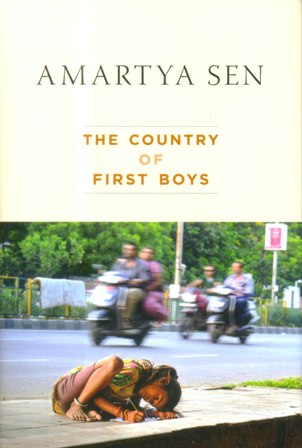
The Country Of First Boys
How do deprivations related to class, caste, and gender interrelate? Why are our political leaders so good in saying what should be done without doing anything much about them? How should we think about Sanskrit and ancient India without adding religious color? Why is it important to revive Nalanda, the worlds oldest university? The Country of First Boys is Amartya Sens intellectual journey through the past and present to seek an understanding of Indias history and the demands of its future. The themes of these essays include the hardened and extreme nature of inequality in India and what can be done about it. One of the many rewards of good schooling denied to most Indians includes the understanding that India is an integral part of a world civilization. Always sensitive to global communication and interaction, Indias own contributions vary from the development of a multiplicity of astronomically reasoned calendars and the invention of games like chess to the establishment of the foundations of several branches of modern mathematics. In this collection, Sen examines justice, identity, deprivation, inequalities, gender politics, education, the media, and the importance of getting your priorities right. These are accessible yet pioneering essays that hold the kernel of many of his seminal works.
-
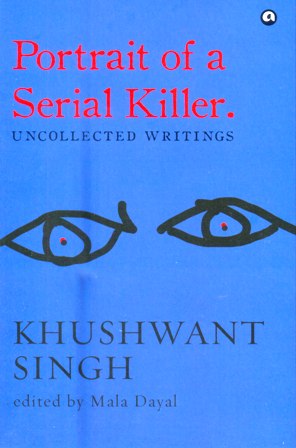
Portrait of a Serial Killer
Portrait of a Serial Killer is an unforgettable celebration of India and Indians by one of our most beloved writers. Published on the hundredth anniversary of Khushwant Singhs birth, none of the essays in this collection has been published in book form before. A chilling account of the serial killer Raman Raghav rubs shoulders with an extraordinary portrait of Jawaharlal Nehru followed by an exuberant encounter with Dev Anand, as well as nearly twenty other profiles of saints, charlatans, writers, singers, politicians and other arresting characters. Another section of the book contains vivid sketches of various parts of the country - an unspoilt tribal village in Bihar, the fire of a gulmohar forest in Bokaro, the strange goings-on in the expat community in Darjeeling, a small community in the hinterland that is terrorized by a sudden invasion of snakes, and a bittersweet paean to Delhi, among others. There are also essays that provide insights into familiar characteristics of India - obnoxious VIPs, violence against women, corruption, amiable lunatics, idiot lawyers, stud bulls, Indian men and much else besides. Elegiac, witty and compelling, this is a book that will delight Khushwant Singhs numerous fans as well as anyone with an interest in contemporary India.
-
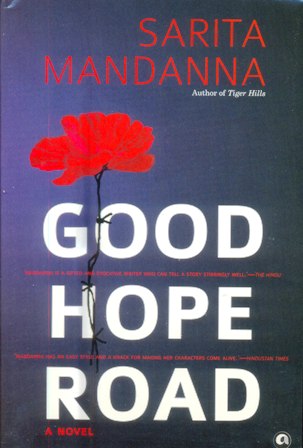
Good Hope Road
Mandanna is a gifted and evocative writer who can tell a story stirringly well. - The Hindu At the outset of the Great War, James Stonebridge, a patrician New England Yankee and Obadaiah Nelson, a gumbo ya-ya Louisiana native, volunteer with the French Foreign Legion in Paris. They are among the handful of Americans who did so at the time, young men filled with idealism and lured by romantic notions of adventure. Despite their different backgrounds, the two form a deep and unexpected friendship that helps them endure the brutal reality of the trenches, a bond that is tested to breaking point by the horrors of the war. Fourteen years after the war has ended, Major James Stonebridge is a haunted recluse. A black mirror, a souvenir from France, hangs on the wall of his Vermont farmhouse, his pale, leached reflection in it hinting at all that he has suffered. The impact of this unspoken burden is felt most of all by his son, Jim. It is only when privileged, spirited Madeleine enters their lives and encourages the Major to join the World War I veterans agitating for their unpaid bonuses in Washington that Jim finally begins to understand the man his father once was, and all that the war took from him. Meanwhile the 1930s are drawing to a close and another war looms. From pre-war Paris to the trenches of Europe and the apple orchards of Vermont, Good Hope Road is a powerful and mesmerizing story of the legacy of war, the search for redemption and the strength of the human spirit.
-
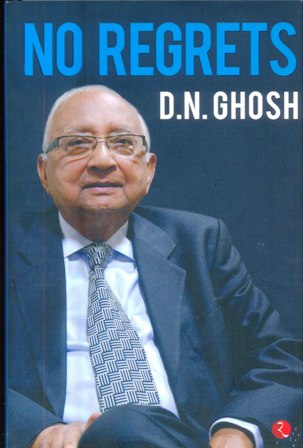
No Regrets
The dramatic build-up to the overnight nationalization of fourteen banks in a single legislative sweep sets the stage for No Regrets. In this book, bureaucrat extraordinaire D.N. Ghosh offers an eyewitness account of perhaps the most important event in Indias banking history post-Independence, baring the manoeuvrings behind the enabling ordinance and the pickle over fair compensation for the dispossessed bank owners. But thats not all. Years later, Ghosh enters the portals of the State Bank of India as its chairman, at a time when the stirrings of change have just begun to be felt in the Indian economy. Anticipating the future, he goes for a paradigm shift: to rid profit of its dirty word tag and place it at the core of the banks operating strategy. Gradually, he takes SBI into the capital markets, establishes its credit standing globally, launches India's first mutual fund and, above all, cajoles the trade unions into accepting full computerization. Post-retirement, Ghosh steps into the corporate world. During this period he deals with scarcely veiled threats from a mighty corporate house and even finds himself verbally assaulted by the promoter of an erstwhile bank. In between, the could-have-been-academic tills the soil for certain reputable management institutes to bloom and grow even as he sets up the credit rating agency, ICRA. Full of untold stories, No Regrets is an honest-to-goodness account of a glorious career spanning over six decades and covering some epochal events whose reverberations continue to be felt in the corridors of bureaucracy, banking and business to this day.
-

Faith & True Love
Distraught over her childs illness, Savitri Sharma found answers in Shyam Baba. Shyam Baba, the deity known for his grace and generosity, channeled through her to alleviate the suffering of his devotees and she committed herself to help all who knocked on her door. Today, she is fondly remembered as Maa by her devotees. She started the Shri Shyam Darbar and a dharamshaala, and passed on the legacy to her grandson, Sunny Sharma, before passing away. Sangeeta Maheshwari met Maa when she was five years old and became an ardent devotee. As a tribute to Maa, her spiritual mother, she narrates the story of her own life and Maas life, and how Maa guided her through the loss of her children to setting up a foundation to help underprivileged children. She hopes that the wisdom Maa shared with her will help those who need to take a pause from 'running on the treadmill', enabling them to introspect on how to balance the two worldsthe inner and the outer worldand integrate both to lead a harmonious life.
-
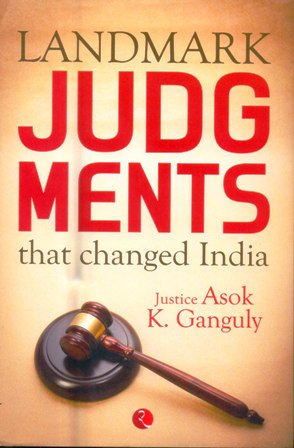
Landmark Judg Ments that changed india
My Perception Of the Constitution is that it articulates the conscience of the nation in particular and of mankind in general. This voice is most eloquent in the judgements of the constitutional courts.
-
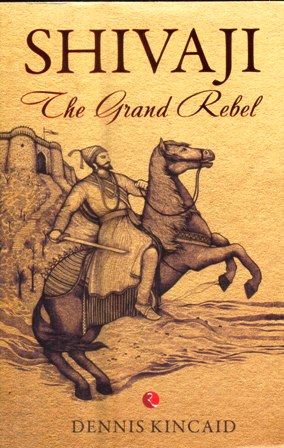
Shivaji The Grand Rebel
He was a great captain and the only one who has had the magnanimity to raise a new kingdom - Mughal Emperor Aurangzeb A great warrior and skilled administrator, Chhatrapati Shivaji Maharaj, better known as Shivaji, was the founder of the great Maratha Empire, and one who instilled a sense of Maratha identity in his people. At a time, when the Mughal Empire was at its zenith, Shivaji was the only one who dared to challenge the might of Emperor Aurangzeb. He steadily grew his army from a humble contingent of 2,000 soldiers to a force of 100,000. Assisted by a disciplined military system, a well-structured administrative organization and a deeply traditional society, soon the Maratha force became the only military power of consequence against the Mughals in India. Including accounts of legendary encounters like those with the Adil-Shahi Sultanate and the menacing Aurangzeb, The Grand Rebel is an epic saga of an Indian warrior king whose tales of victory and valour have been inspiring the nation for centuries.
-
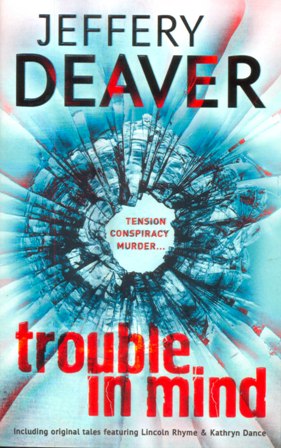
Trouble In Mind
Tension...An aging actor attempts to revive his career by entering a celebrity poker game for a reality TV show. Can he outwit his devious opponents, or is his fate doomed from the outset? Conspiracy... A successful crime writer dies under seemingly natural circumstances, but for one cop, doubts are lingering. There's certainly motive for murder - or is there more to the case than meets the eye? murder...Lincoln Rhyme is announced dead, shot by one of his suspects in cold blood. Is this the end of the line for the criminalist, or just another twist in the tale?
-
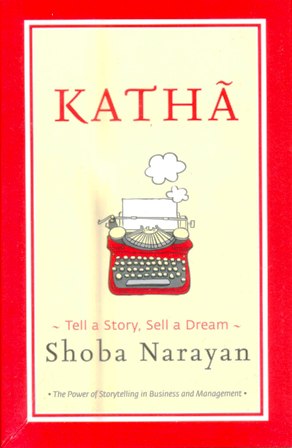
Katha
Some of the most successful people of our times are master storytellers. From Steve Jobs to N.R. Narayana Murthy, from Indra Nooyi to Rakesh Jhunjhunwala, the best communicators are those who effectively use stories, analogies, metaphors and even jokes to get their message across. Maybe you are an entrepreneur, trying to sell your business plan to potential investors. Maybe you are the head of a company, trying to influence your employees to follow a rather unconventional path. Or a mid-level manager, trying to convince your boss to take a chance on a project. No matter which field you are in, there comes a time when you have to persuade and influence, and theres no better way to do it than by narrating stories. In fact, the modern designation of chief storytelling officer (CSO) - which is said to have begun at Nike in the nineties - is a growing trend in companies. Katha - Tell a Story, Sell a Dream is about the art of storytelling in business. It tells you why stories are important, when you must tell a story and how to find and tell the most effective tales, whether you are communicating to stakeholders, business associates, employees or colleagues. Written in simple, lucid prose, Kath will demonstrate why the art of storytelling is perhaps the number one skill and how the power of storytelling may well be the key to achieving your goals.
-

Top Secret Twenty - One
The No. 1 New York Times bestseller The dead ends are turning into dead bodies. Stephanie Plum is getting desperate. She's running out of leads in the search for Jimmy Poletti, who was caught selling more than cars out of his New Jersey dealership. Even Joe Morelli, the city's hottest cop, is struggling to find the criminal wheeler and dealer. Stephanie's No. 1 temptation, Ranger, is also struggling. There's a killer in town with a personal vendetta against him. If Ranger wants to survive, he'll need Stephanie's help and to reveal a piece of his mysterious past. Death threats, highly trained assassins and highly untrained assassins are all in a day's work for bounty hunter Stephanie Plum!
-
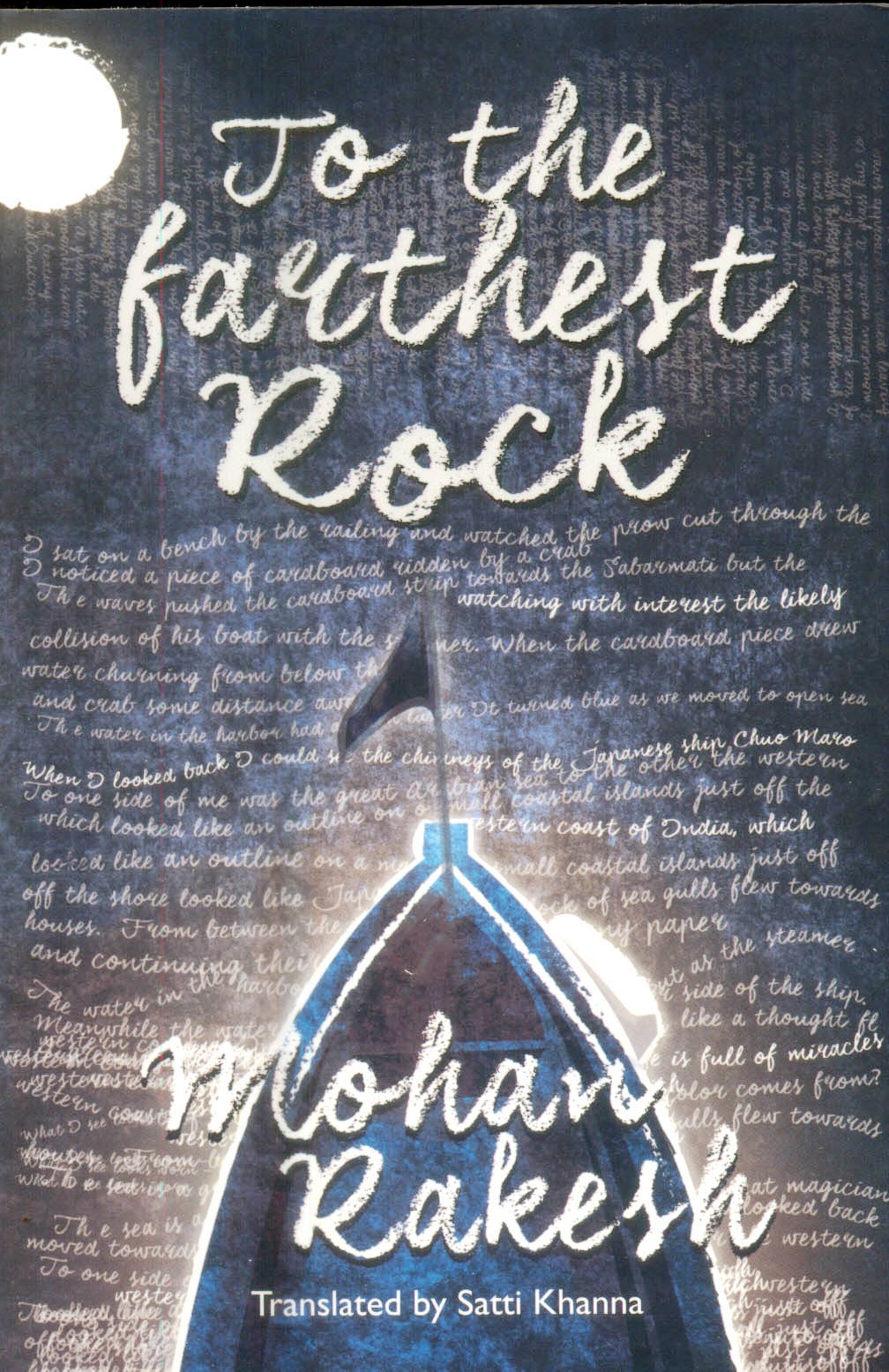
To The Farthest Rock
In 1952, at the age of twenty-seven, Mohan Rakesh undertook a journey to south India, travelling by bus, train and steamer along the western coast from Bombay to Kanyakumari. Young and ardent, he dreamt of the wide expanse of sea that would make up for a childhood spent in Amritsar’s narrow lanes, and had visions of comely guides who would look kindly upon his wandering. But once he set out from Delhi on a train to Bombay, his visions slipped away and complex reality took over. To the Farthest Rock is a remarkable account of the hope and despair that characterized post-Independence India. Rakesh had only published a few short stories when he quit a teaching job in Shimla in order to travel, but readers who know his later work will recognize his skill with portraits of people and his exceptional ability to render fluctuations of feeling. Set against the verdant coastal landscape of Goa and Kerala, this absorbing travelogue is a fine introduction to the mind of one of Hindi’s greatest novelists and playwrights.
-
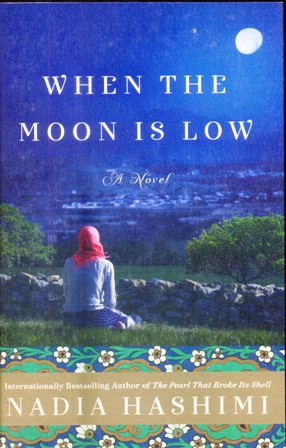
When The Moon Is Low
In Kabul we meet Fereiba, a schoolteacher and her husband, Mahmoud, a man whose love for her was greater than any love shed ever known. But Fereibas middle class world of education, work and comfortable family life implodes when the Taliban rises to power. Mahmoud, a civil engineer, becomes a target of the new regime and is murdered by local henchmen. Forced to flee Taliban controlled Kabul with her three children,Fereiba has only one option - find a way to cross Europe and reach her sisters family in England, who have offered them asylum. With forged papers and help from kind strangers, they cross the mountains into Iran by night. Exhausted and brokenhearted but undefeated, Fereiba manages to smuggle them as far as Greecebut in a busy market square, their fate takes another turn for the worse when her teenage son Saleem becomes separated from the rest of the family. Faced with an almost unimaginable choice, Fereiba makes the desperate decision to continue on to London with her daughter and baby while Saleem falls into the shadowy underground network of undocumented Afghans who haunt the streets of Europe s capitals. From the refugee camps of Greece, through Rome and even Paris, Fereiba and Saleem struggle to reunite, to survive and to find a place where they can begin to reconstruct their lives. Like The Pearl That Broke Its Shell, this is a heartfelt revelation of a novel, extremely readable and thought-provoking, with characters who haunt the reader long after the last page is turned. And yes, like Pearl, this is a page-turner that ends happily.
-
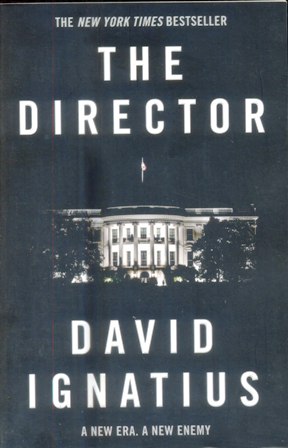
The Director
A Man with Something to Change Graham Weber, the new director of the CIA, is tasked with revolutionising an agency in crisis. Never intimidated by a challenge, Weber intends to do just that. A Hacker With Something To Expose Weber's task greatens when a young computer genius approaches the CIA with proof their systems have been compromised. There is a breach. There is a mole.A Woman With Something To Prove The agent who takes this walk-in is K. J. Sandoval - a frustrated yet ambitious base chief desperate to prove her worth to the agency and its new director. Weber must move quickly. And he must choose his allies carefully, if he is to succeed in identifying an enemy that is inside the gates, and out to destroy him.
-
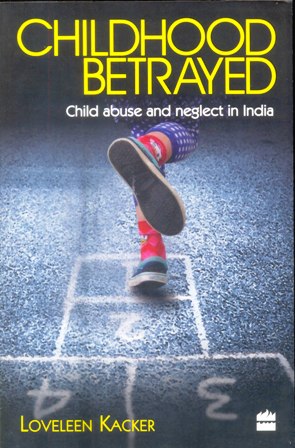
Childhood Betrayed Child Abuse and Neglect in Ind
No social problem is as universal as the oppression of the child. No slave was ever so much the property of his master as the child is of his parent. Never were the rights of man ever so disregarded as in the case of the child. Maria Montessori In India, where even stones and trees are worshipped, children are routinely beaten, neglected and abused. Daily news is rife with stories of abuse and neglect, often perpetrated in the name of discipline or protection. The Nithari case, female foeticide, instances of child marriage and the sexual abuse of minors the statistics are frightening. Lakhs of children are robbed of childhood and India is doing little to remedy that. While the government now acknowledges education and nutrition as the essential entitlements of children, there has been little legislation or initiative to safeguard their most fundamental rights. Child protection is still nowhere on the nations radar. Loveleen Kacker distilled several years of research to write this cogent and powerful volume on why child abuse and neglect happens and how it affects children in India. She examines physical, emotional and sexual abuse, as well as maltreatment, especially of the girl child. Bringing real-life instances and case studies together with Kackers own work on the rights of children, this is a guide for parents, policy makers, schoolteachers, paediatricians, childcare specialists indeed, anyone with a stake in the welfare of minors. A timely and much-needed addition to the literature on child rights, Childhood Betrayed is also a call for change nay a call to arms.
-
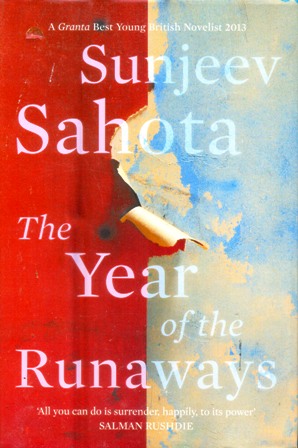
The Year Of The Runaways
Three young men from very different backgrounds come together in a journey from India to England, where they hope to begin something new. To support their families, where they can, to build their future, to show their worth, to escape the past. They have almost no idea of what awaits them. In a dilapidated shared house in Sheffield, Tarlochan, a former rickshaw driver, will say nothing about his life in Bihar. Avtar has a secret that binds him to the unpredictable Randeep. Randeep, in turn, has a visa-wife in a flat on the other side of town, whose cupboards are full of her husbands clothes, in case the immigration men surprise her with a visit. She is Narinder and her story is the most surprising of them all. Utterly absorbing and beautiful in its scope, The Year of the Runaways is written with compassion and touched by grace. As Tochi, Avtar, Randeep and Narinder negotiate their dreams, desires and shocking realities, as their histories continue to pull at them, as the seasons pass, what emerges is a novel of overwhelming humanity: one which asks how far we can decide our own course in life and what we should do for love, for faith and for family.