

-
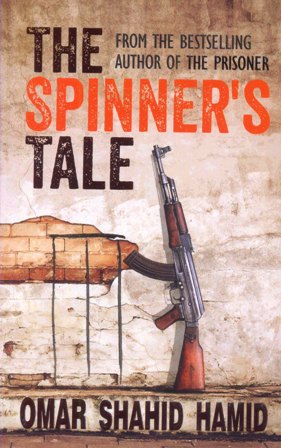
The Spinner's Tale
A racy thriller about two friends whose lives diverge drastically when one of them becomes an infamous jihadi militant. Sheikh Ahmed Uzair Sufi is one of the most feared men in Pakistan, a top Jihadi militant, who believes in nothing save his own limitless scope for violence. But no one suspected this future back in 1994, when he was simple old Ausi and leaves school with his cricket mad best friend Eddy to start a new life. While Eddy goes to college in America, Ausi's life takes dangerous and unexpected turns. The two friends stay in touch even as they pursue vastly different lives, their shared passion for cricket and nostalgia for their school days binding them together. Even as Ausi treads down a darker path, what will happen to their friendship? Omar Shahid Hamid, bestselling author of The Prisoner, takes us on another thrilling, sinister ride, stretching from Karachi to Kashmir to Afghanistan, in The Spinner's Tale.
-
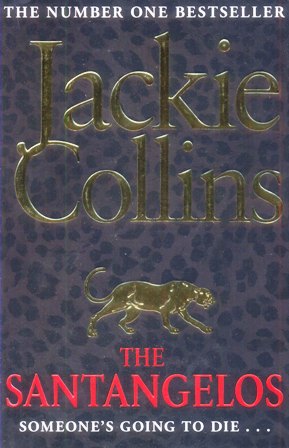
The Santangelos Someone's Going To Die
A vicious hit, a vengeful enemy, a drug addled Colombian club owner and a sex crazed Italian family, the ever powerful Lucky Santangelo has to deal with them all. Meanwhile Max-her teenage daughter is becoming the 'It' girl in Europe's modeling world. And her Kennedyesque son, Bobby, is being set up for a murder he didn't commit. But Lucky can deal. Always strong and unpredictable, with her husband Lennie by her side, she lives up to the family motto-Never fuck with a Santangelo. Lucky rules, the Santangelos always come out on top.The Santangelos is an epic family saga filled with love, lust, revenge and passion.'
-
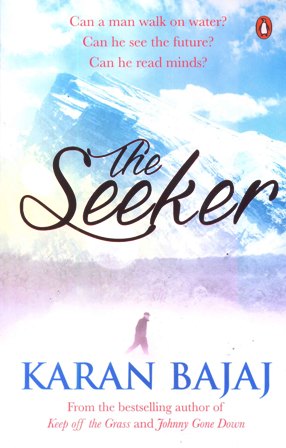
The Seeker
Can a man walk on water? Can he see the future? Can he read peoples minds? One man will find answers that challenge all his rational beliefs. After a deep personal loss, Maximus Pzoras, Harvard economist and Wall Street banker, sets out on a quest to find the cause of human pain and suffering. His journey takes him from New York to a hidden ashram in south India to a drought-stricken village to a freezing cave high in the Himalayas. And as he goes from cubicle dweller to cave dwelling yogi, he starts to develop extraordinary powers. But will Max, investment banker turned Himalayan sage, find the answers to the questions that led him to India? The Seeker is both a gripping adventure and a story of a mans tremendous inner transformation, a Siddhartha for our generation.
-
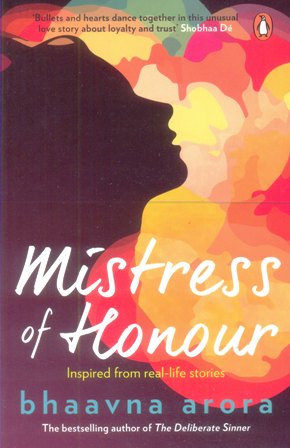
Mistress Of Honour
When Potnis a captain in the Indian Army meets Pansy during the Operation Blue Star he knows he has found the love of his life. Their passionate romance leads them to the altar and blossoms into a beautiful child, Rihana. History repeats itself when Advik, a wayward boy from a broken family, catapults into Rihanas heart, as smoothly as he conquers the skies as an Air Force pilot. What follows is a night of unabashed love, transporting the couple to heavenly bliss. Where will their unbridled love lead them? Will Rihanna remain a mistress to Advik, for whom the love for his country comes first or will she be able to make a place in his heart that is second to none? This heartbreaking saga of love, courage and sacrifice will leave you asking for more.
-

Scion Of Ikshvaku
Ram Rajya. The Perfect Land.But perfection has a price. He paid that price. 3400 BCE. INDIA Ayodhya is weakened by divisions. A terrible war has taken its toll. The damage runs deep. The demon King of Lanka, Raavan, does not impose his rule on the defeated. He, instead, imposes his trade. Money is sucked out of the empire. The Sapt Sindhu people descend into poverty, despondency and corruption. They cry for a leader to lead them out of the morass. Little do they appreciate that the leader is among them. One whom they know. A tortured and ostracised prince. A prince they tried to break. A prince called Ram. He loves his country, even when his countrymen torment him. He stands alone for the law. His band of brothers, his Sita, and he, against the darkness of chaos. Will Ram rise above the taint that others heap on him? Will his love for Sita sustain him through his struggle? Will he defeat the demon Lord Raavan who destroyed his childhood? Will he fulfil the destiny of the Vishnu? Begin an epic journey with Amish’s latest: the Ram Chandra Series.
-

Dead As A Dodo
Mission - Dead as a Dodo Mission Brief - Somebody is on an extinction operation, stealing all the last specimens of highly endangered species. This mysterious crook has somehow managed to discover the impossible - a living specimen of Raphus cucullatus, aka, the dodo. Yes, the same flightless bird that was hunted to oblivion in Mauritius more than 300 years ago! This dodo has become the single most priceless creature on the planet and it must be rescued immediately. Without delay, Animal Intelligence Agency agents are assigned to this urgent mission. Note - The Animal Intelligence Agency is a multi-species non-governmental agency. Specially trained Animal and Human agents work undercover to save animals and save the world. Some of them have a license to kill. Agent no. 002 Species - Panthera tigris tigris Name - Bagha Currently the only agent with a license to kill. He is the most dangerous and experienced operative, with the scars to prove it. Agent no. 015 Species - Semnopithecus entellus Name - Kela this operative was formerly a disgraced agent, stripped of his number. However, after his sterling performance in mission tiger by the Tail, his number and privileges have been restored. Agent no. 11.5 Species - Homo sapiens sapiens Name - Rana One of only two people in the world who use Jungle Speak to communicate across species. Extremely good with computers and all things tech. Far from dangerous or lethal. However, his intelligence is a real contribution to a mission. His allergies are a real problem. Indications are that the mission will take the agents to Mauritius, America and as far off as the Arctic Circle and the North Pole. They must not fail, come what may. This dodo must not die.
-
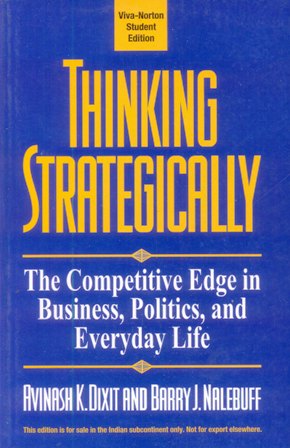
Thinking Strategically-The Competitive Edge in Bus
Thinking Strategically is a bestselling book that teaches its readers to face and tide over almost any adversary in professional life. This book builds itself on case studies from the fields of business, sports, politics, gambling, and even movies. What it basically does is outline the techniques of strategy making, and teach the readers the ways to apply the same. The book begins with an introduction to the subject of strategic behavior. It then deals with the subject in three different sections. The first section involves the reading and understanding of the rival's strategy. The second and third sections highlight the means of putting into place strategies and resolving problems with them. The case studies included give the readers a fair idea as to how they may expect the results to turn out in real life.
-

Shake That Brain
Shake That Brain! is a collection of creative and inspiring tips and tools for finding solutions in a variety of areas -- from sales, marketing and product creation ... to ethics, innovation and the bottom line. And these are skills you can use at home, on the job, or wherever are you. The book is filled with exercises, easy-to-apply formulas, entertaining pop-quizzes, powerful graphics (like innovative credit card designs and Do Not Disturb signs) and eye-opening teaching examples from the world of business, technology, advertising and more -- all designed to make the reading experience both profitable and fun!
-
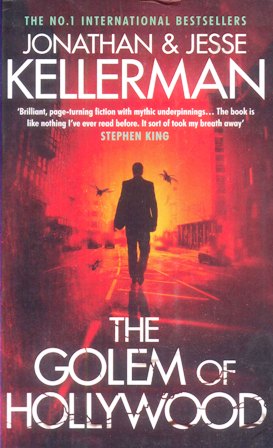
The Golem Of Hollywood
A burned-out L.A. detective . . . a woman of mystery who is far more than she seems . . . a grotesque, ancient monster bent on a mission of retribution. When these three collide, a new standard of suspense is born. The legend of the Golem of Prague has endured through the ages, a creature fashioned by a sixteenth-century rabbi to protect his congregation, now lying dormant in the garret of a synagogue. But the Golem is dormant no longer. And for Detective Jacob Lev the mystery of how he spent last night pales in comparison the one he's about to be called upon to solve.
-

No Time For Goodbye
On the morning she will never forget, suburban teenager Cynthia Archer awakes with a nasty hangover and a feeling she is going to have an even nastier confrontation with her mom and dad. But when she leaves her bedroom, she discovers the house is empty, with no sign of her parents or younger brother Todd. In the blink of an eye, without any explanation, her family has simply disappeared. Twenty-five years later Cynthia is still haunted by unanswered questions. Were her family murdered? If so, why was she spared? And if they're alive, why did they abandon her in such a cruel way? Now married with a daughter of her own, Cynthia fears that her new family will be taken from her just as her first one was. And so she agrees to take part in a TV documentary revisiting the case, in the hope that somebody somewhere will remember something - or even that her father, mother or brother might finally reach out to her . . . Then a letter arrives which makes no sense and yet chills Cynthia to the core. And soon she begins to realise that stirring up the past could be the worst mistake she has ever made . . .
-
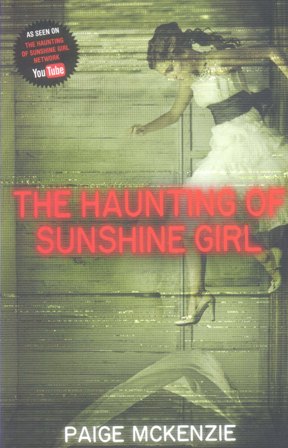
The Haunting Of Sunshine Girl
In that place where you're more asleep than awake any more, I hear something else. A phrase uttered in a child's voice, no more than a whisper-night. Shortly after her sixteenth birthday, Sunshine Griffith and her mother Kat move from sunny Austin, Texas, to the rain-drenched town of Ridgemont, Washington. Though Sunshine is adopted, she and her mother have always been close, sharing a special bond filled with laughter and inside jokes. But from the moment they arrive, Sunshine feels her world darken with an eeriness she cannot place. And even if Kat doesn't recognize it, Sunshine knows that something about their new house is just creepy. In the days that follow, things only get stranger. Sunshine is followed around the house by an icy breeze, phantom wind slams her bedroom door shut and eventually, the laughter Sunshine hears on her first night evolves into sobs. She can hardly believe it, but as the spirits haunting her house become more frightening-and it becomes clear that Kat is in danger-Sunshine must accept what she is, pass the test before her and save her mother from a fate worse than death.
-

Kevin Pietersen-The Autobiography
The fascinating life story of professional cricketer Kevin Pietersen, MBE, from his childhood in South Africa to his recent experiences as one of the leading lights in the world of International cricket. Kevin was dropped from the England squad in February 2014, seemingly calling time on an International career that began nearly ten years earlier. The decision puzzled many observers - although the England team had failed miserably in the Ashes tour of 2013 - 14, Kevin was the tourists' leading run scorer across the series and he remains the country's highest run scorer of all time across all formats of the game. Kevin reveals all in his autobiography, telling the stories behind the many other highs and lows of his incredible career. Giving readers the full story of his life, from his childhood in South Africa to his experiences as one of the leading lights in the world of international cricket, KP is an autobiography that entertains and fascinates readers in equal measure.
-
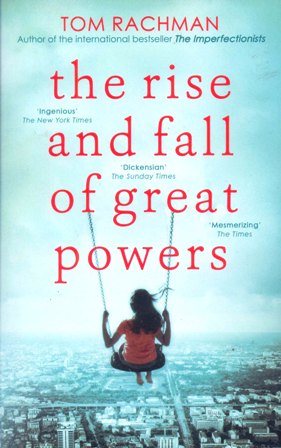
The Rise And Fall Of Great Powers
9-year-old Tooly is living in Bangkok, largely left to her own devices, when she is spirited away by a seductive group of outsiders who take her from city to city across the globe. At 20, she is wandering the streets of Manhattan with a scribbled-on map, living with a ping-pong-playing, avocado-loving Russian ?migr? called Humphrey and scamming strangers for her shadowy protector, Venn. Now, aged 31, she runs a second-hand bookshop on the Welsh borders and has found a kind of peace with her strange upbringing - until she gets a message from an old flame asking her to come back to New York to see her dying father. Tooly has spent so much of her life becoming what others want her to be, she has lost all sense of herself. Warm, hilarious, moving and fizzing with intelligence, THE RISE AND FALL OF GREAT POWERS is a masterpiece about the search for identity, the people who rise into and fall out of our lives, and how to figure out what home means.
-
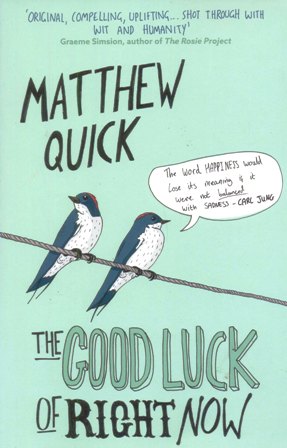
The Good Luck Of Right Now
From the author of the silver linings playbook, a funny and tender story about family, friendship, grief, love and Richard Gere. Bartholomew Neil is thirty-nine and lost. After the death of his beloved mum he has no idea how to be on his own and he knows it's about time he found his flock. But how does a man whose whole life has been grounded learn how to fly? And what can Richard Gere, a beautiful librarian, a struggling priest and a foul-mouthed and troubled young man teach Bartholomew about finding love and happiness? Whatever it is, Bartholomew is in for a lot more than he bargained for. The Good Luck of Right Now is original, compelling and uplifting. His writing is shot through with wit and humanity Graeme Simsion, author of The Rosie Project.
-
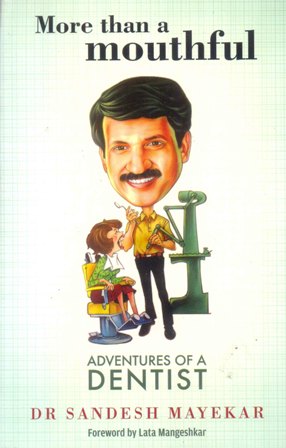
More Than A Mouthful-Adventures Of A Dentist
We use our teeth every day to munch on an apple or carrot, to hold a pen-knife or a hairpin, we put them on display when we smile or laugh. But we rarely think about the strain we subject them to, rushing to the dentist only when our teeth cry out in pain. Or, sometimes, when they disturb the symmetry of our face. Teeth may get lost while shooting for a Bollywood fighting scene. They may shrink to half their size because of too much cola intake. A man may commit suicide because of the buzzing in his ears caused by a strained muscle in the jaw. Dr. Sandesh Mayekar has seen all this and worse. He has filled the dark cavity in a molar, fought smelly mouth odour, whitened a ladys gums for a beauty contest and sealed that wide gap between a mans front teeth for a photo shoot. More than a mouthful tells the stories behind those healthy teeth that you see on TV or on the ramp. Mayekar has stayed up nights, sometimes travelled miles, to address an emergency. He has assuaged patients fears with as much clinical care as personal concern. It is also the tale of one mans determination to master his craft and lay the foundation of aesthetic dentistry in India is a journey that has taken him from humble beginnings in a chawl in Mumbai to the swanky bandstand at Bandra. Written with compassion and laced with wit, more than a mouthful is what the doctor prescribes to rid you of that fear of the dentist.
-
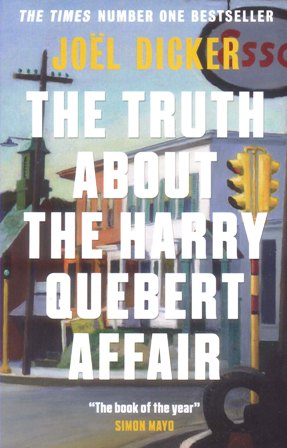
The Truth About The Harry Quebert Affair
The day of the disappearance. The day Somerset, New Hampshire, lost its innocence. The summer, struggling author Harry6 Quebert fell in love with fifteen year old Nola Keelergan. Thirty-three years later, her body is dug up from his yard, along with a manuscript copy of the novel that secured his lasting fame. Quebert is the only suspect.
-
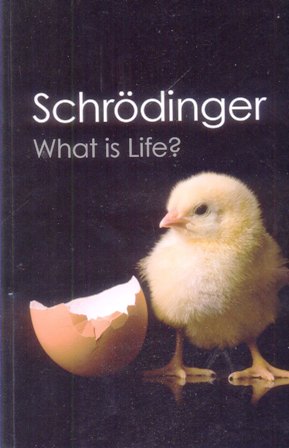
What is Life?
It was written for the layman, but proved to be one of the spurs to the birth of molecular biology and the subsequent discovery of DNA. What is Life? appears here together with Mind and Matter, his essay investigating a relationship which has eluded and puzzled philosophers since the earliest times. Brought together with these two classics are Schrodinger's autobiographical sketches, which offer a fascinating account of his life as a background to his scientific writings.