



-

Feel the Fear Ruby Redfort
The fourth book in the scarily awesome Ruby Redfort series, by multi million copy bestselling author Lauren Child. This time Ruby must pit her wits against a seemingly invisible foe. How do you set your sights on catching a light-fingered villain if you cant even see him?
-

Scotsman of my Dreams
Once the ton�s most notorious rake, Dalton MacIain has returned from his expedition to America during the Civil War-wounded and a changed man. Instead of attending soirees, he now spends his time as a recluse. But Dalton�s peace is disturbed when Minerva Todd barges into his London townhouse, insisting he help search for her missing brother Neville. Though Dalton would love to spend more time with the bewitching beauty, he has no interest in finding Neville - for he blames him for his injury. Minerva has never met a more infuriating man than the Earl of Rathsmere yet she is intrigued by the torrid rumors she has heard about him. and the fierce attraction pulling her toward him. Dalton does not count on Minerva�s persistence-or the desire she awakens in him, compelling him to discover her brother�s fate. But when danger surrounds them, Dalton fears he will lose the tantalizing, thoroughly unpredictable woman he has come to love.
-

When a Scot Ties The Knot
On the cusp of her first London season, Miss Madeline Gracechurch was shyly pretty and talented with a drawing pencil, but hopelessly awkward with gentlemen. She was certain to be a dismal failure on the London marriage mart. So Maddie did what generations of shy, awkward young ladies have done - she invented a sweetheart. A Scottish sweetheart.One who was handsome and honorable and devoted to her, but conveniently never around. Maddie poured her heart into writing the imaginary Captain MacKenzie letter after letter ...and by pretending to be devastated when he was (Not really) killed in battle, she managed to avoid the pressures of London society entirely. Until years later, when this kilted Highland lover of her imaginings shows up in the flesh. The real Captain Logan MacKenzie arrives on her doorstep - handsome as anything, but not entirely honorable. He�s wounded, jaded, in possession of her letters... and ready to make good on every promise Maddie never expected to keep.
-
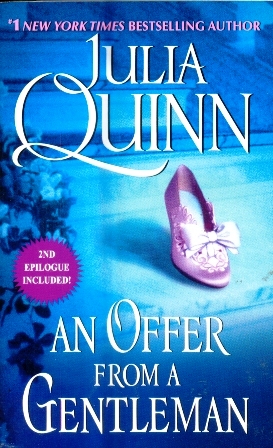
An Offer from a Gentleman
Will she accept the offer before the clock strikes midnight? Sophie Beckett never dreamed she�d be able to sneak into Lady Bridgerton�s famed masquerade ball. Though the daughter of an earl, Sophie has been relegated to the role of servant by her disdainful stepmother. But now, waltzing in the strong arms of the debonair and devastatingly handsome Benedict Bridgerton, she feels like royalty. Alas, she knows all enchantments must end when the clock strikes midnight. Who was that extraordinary woman? Ever since that magical night, a radiant vision in silver has blinded Benedict to the attractions of any other-except, perhaps, this alluring and oddly familiar beauty dressed in housemaid�s garb. He has sworn to find and wed his mystery miss, but this breathtaking maid makes him weak with wanting her. If he offers her his heart, will he sacrifice his only chance for a fairy tale love?
-

Her Lucky Cowboy
Champion rodeo rider Dane Bowden is eight seconds from winning under the Vegas lights. One last hurrah before reluctantly returning to his family's Montana ranch. But his bull has other plans. When Dane wakes up, he's sure he's died and gone to heaven...because the doctor who comes to his aid is the same girl who saved his life and disappeared years ago. Bell would do anything for Dane. He's the fantasy that always kept her going. A child genius hidden away by her family, Bell was the secret no one talked about, the girl no one wanted. Despite finding success as a young surgeon,she's still the awkward girl who's never had a boyfriend. So why does Dane, a notorious playboy and sizzling-hot cowboy,insist on taking her on a real date? Bell is the only woman in Dane's heart. When a rodeo rivalry turns deadly, it's his turn to save Bell's life-because he sure as hell won't lose his guardian angel again.
-
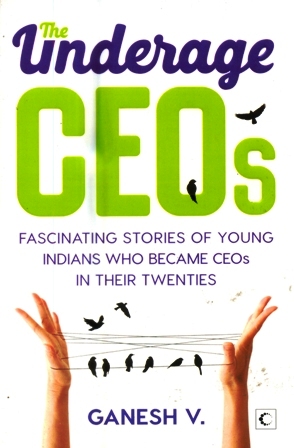
The Underage CEOs-Fascinating Stories of Young Ind
As an ethical hacker, SOURAV KARMAKAR helps protect priceless online data. SHADAB HASSAN is transforming the lives of underprivileged children in Jharkhand. PRIYANKA AMAR is introducing the concept of home farms to the cramped houses of Mumbai. AVIK BHATTACHARYA has channelled his passion for dance into a profitable business. The Underage CEOs is about the wave of youth entrepreneurship sweeping through India. It tells the stories of eleven youngsters who have set up their own ventures right after college, thereby becoming CEOs in their twenties. They have rejected conventional career paths, fought pressures from society, peers and parents, and are now in charge of their own destinies. They have changed the lives of thousands of people through their businesses. What�s more, they are having a lot of fun too! These young men and women are not exceptions. Today, the business climate in India offers multiple opportunities to those with good ideas. If you have a strong vision and drive, there are investors willing to back you with funds.The Underage CEOs is a call to action to take a leap of faith and rewrite your destiny for a brighter tomorrow!
-

How to Buy a House
A house spells security and comfort. It is a place for love, laughter and the joy of family life. Buying a house might be the biggest investment you ever make. It is certainly the wisest one. The price of land is rising steadily?and in the cities, steeply?and it is unlikely to depreciate. However, house-buying can be a challenge for the inexperienced. E.Jayashree Kurup, head of Content and Research at Magicbricks.com, India's leading property website, offers you a guiding hand.Here is a list of her primary checks Identify the amount of home loan you need and how quickly you can pay it back. Choose a trusted developer and shortlist options based on affordability, property condition and social infrastructure. Survey the neighbourhood and work out security concerns, check ventilation and carpet area. Decide on the best location in terms of connectivity by rail and air, closeness to the market, hospitals and your office. Finally, work out the taxes, registration and insurance. How to Buy a House is the only guide you need to safely make your way to your dream home.
-
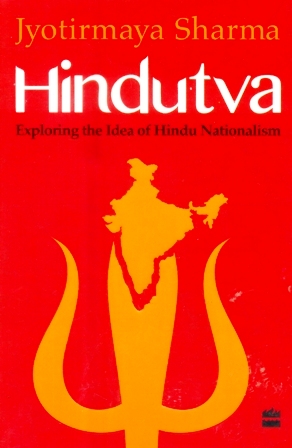
Hindutva-Exploring the Idea of Hindu Nationalism
The upsurge of militant Hindu nationalism in the recent past has brought to the fore questions of who a Hindu is, what Hinduism is and what Hindutva and Hinduism mean to Hindus. If Hindutva is a way of life, who are its followers? And for those who are, how necessary is it that its practice should prevail upon all others? These are questions of great relevance in today's India. This revised edition of Hindutva, which includes a new essay and introduction, goes beyond the existing inquiry into Hindu identity, nationalism and culture, through the writings of thinkers Dayananda Saraswati, Sri Aurobindo, Swami Vivekananda and Vinayak Damodar Savarkar. With characteristic academic rigour and research, Jyotirmaya Sharma offers us original insights into the intellectual traditions that have nourished political Hindutva. The book calls for revisiting those traditions in which Hinduism is seen as being more inclusive and self-critical, at times even of its own fundamental premises.
-

Golden Lion
East African Coast, 1670. In a time of brave and brutal adventure, one man will journey across land and sea to pursue his greatest enemy.The Golden Bough, captained by Henry �Hal� Courtney, is running south from Ethiopia to Zanzibar. Below deck, both his crew and his lover, the fearless warrior Judith Nazet, sleep. As the moon glints through clouds, Hal sights a ship passing close by. Although there is an uneasy truce between the warring English and Dutch, Hal scents danger. When the Bough is boarded, the crew must go hand to hand to defend their ship and their lives. But soon Hal will face even graver danger, as he discovers his mortal enemy still lives and is hell-bent on revenge. he must pursue his nemesis across desert savannah,through the seedy underbelly of Zanzibar�s slave markets and shark-infested waters, imperilling his own life at every turn. But it will take more than a slave�s shackles to hold Hal Courtney.A thrilling blend of extraordinary drama and epic storytelling, Golden Lion sees Wilbur Smith return in triumphant form to the adventures of his beloved and bestsellling Courtney family.
-
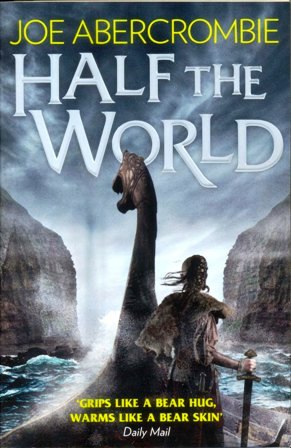
Half the World
Thorn lives to fight. But she has been named murderer by the very man who trained her to kill. 'Sometimes a girl becomes a warrior', fate traps her in the schemes of Father Yarvi, sending her across half the world to seek allies against the ruthless High King. 'Sometimes a warrior becomes a weapon', beside her is brand, a young warrior who hates to kill. A failure in his eyes and hers, he has one chance at redemption. 'And weapons are made for one purpose', must thorn be a tool in other hands or can she carve her own path? Is there a place beyond legend for a woman with a blade?
-

Creature Comforts
Izzy has broken off her engagement to her feckless fiance Kieran and returned to her childhood home, the sleepy village of Halfhidden. She soon realizes that life in the village is anything but peaceful, for one thing shes living with her mad aunt Debo and her pack of dogs and for another, Izzy has a lot of unanswered questions. When she was a teenager, Izzy was involved in a terrible accident, involving various inhabitants of Halfhidden. As she sets out to discover what actually happened on the night of the accident, she realizes that her painful past is actually standing in the way of her future happiness. So when a handsome stranger comes to Halfhidden will she let love back into her life?
-
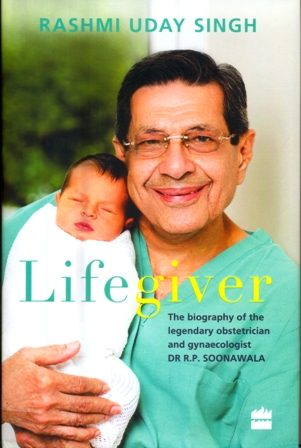
Lifegiver
This the fascinating story of Dr R.P. Soonawala, the man synonymous with gynaecology in India. He designed India's first female contraceptive in 1963, now called the Soonawala IUD, he has conducted scores of training programmes across towns and villages in India, training thousands of doctors to deliver better health care. He was awarded the Padmashree in 1991. Acclaimed writer Rashmi Uday Singh pens the story of his journey from being the grandson of an engine driver and starting work in a small hospital in Mumbai to birthing generations of Kapoors, Ambanis, Godrejs and Birlas. Interspersed are tales of a how a common love for hockey led to his falling in love with the stunning Piloo Gimi, his years of struggle as a student and his close connection with each of his patients and ward boys.
-
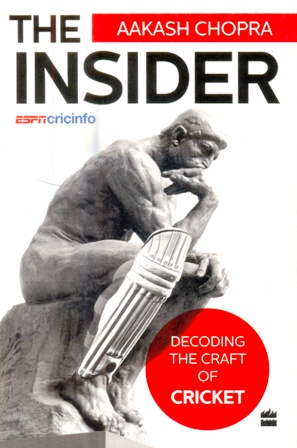
The Insider
What constitutes pressure? How does a batsman maintain concentration while batting? How does one define being in-form and out-of-form? How do cricketers prepare for different formats of the game? And how is it that certain teams revel under pressure while others choke? In the first-ever book on the craft, both psychological and physical of cricket, former Indian cricketer Aakash Chopra lays bare every thought inside a cricketers head and brings alive what he thinks, how hes likely to react to certain situations in the game, and above all, why he reacts the way he does.From reading the bowler to reading the batsman, from playing the bouncer to fielding at short-leg, from technical aspects of the game to the mental, from the tangible to the abstract,The Insider is an important book that shuts out the noise and hysteria and lets every fan of the game understand what matters most: The game itself.
-
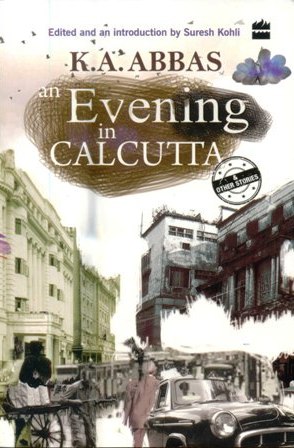
An Evening in Calcutta
Khwaja Ahmad Abbas (1914-87) was a prolific political commentator, short-story writer, novelist, scriptwriter and a film-maker who preferred to call himself a communicator. He published seventy-three books in English, Urdu and Hindi, including an engaging autobiography, I Am Not an Island and two semiautobiographical novels, Inquilab and The World Is My Village, detailing contemporary Indian history. His works have been translated into several Indian and foreign languages including Russian, German, Arabic, Italian and French. Abbas received several state and national honours, including the Padma Shri in 1969 and was involved in the making of sixty Hindi films. Suresh Kohli (born in 1947) is a poet, writer, translator, editor, literary critic and fi lm historian with more than thirty-five published works including five volumes of poetry and a novel. He is also a short and documentary film-maker, with over a hundred films to his credit that have been screened, apart from India, in Australia, France, Germany, Spain, the United Kingdom and Nepal. He lives in Delhi and is currently working on a long abandoned novel and a collection of short stories.
-
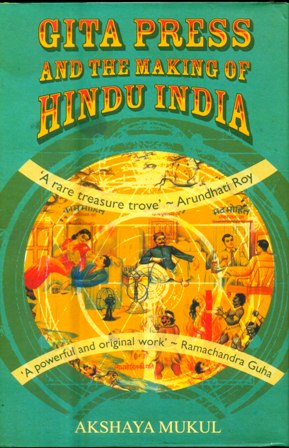
Gita Press and the Making of Hindu India
In the early 1920s, Jaydayal Goyandka and Hanuman Prasad Poddar, two Marwari businessmen-turned-spiritualists, set up the Gita Press and Kalyan magazine. As of early 2014, Gita Press had sold close to 72 million copies of the Gita, 70 million copies of Tulsidas's works and 19 million copies of scriptures like the Puranas and Upanishads. And while most other journals of the period, whether religious, literary or political, survive only in press archives, Kalyan now has a circulation of over 200,000, and its English counterpart, Kaylana-Kalpataru, of over 100,000. Gita Press created an empire that spoke in a militant Hindu nationalist voice and imagined a quantifiable, reward-based piety. Almost every notable leader and prominent voice, including Mahatma Gandhi, was roped in to speak for the cause. Cow slaughter, Hindi as national language and the rejection of Hindustani, the Hindu Code Bill, the creation of Pakistan, India's secular Constitution: Kalyan and Kalyana-Kalpataru were the spokespersons of the Hindu position on these and other matters. The ideas articulated by Gita Press and its publications played a critical role in the formation of a Hindu political consciousness, indeed a Hindu public sphere. This history provides new insights into the complicated and contested rise to political pre-eminence of the Hindu Right. Gita Press and the Making of Hindu India is an original, eminently readable and deeply researched account of one of the most influential publishing enterprises in the history of modern India. Featuring an extraordinary cast of characters - buccaneering entrepreneurs and hustling editors, nationalist ideologues and religious fanatics - this is essential (and exciting) reading for our times.
-

Did I Mention I Love You?
Did I Mention I Love You? is first in the sensational DIMILY trilogy, which follows sixteen-year-old Eden Munro as she travels from Portland to begrudgingly spend the summer with her father in the beachfront city of Santa Monica, California. Eden's parents are divorced and have gone their separate ways and now her father has a brand new family. For Eden, this means she's about to meet three new step-brothers. The eldest of the three is Tyler Bruce, a troubled teenager with a short temper and a huge ego. Complete polar opposites, Eden quickly finds herself thrust into a world full of new experiences as Tyler's group of friends take her under their wing. But the one thing she just can't understand is Tyler and the more she presses to figure out the truth about him, the more she finds herself falling for the one person she shouldn't - her step-brother.
-

You
When a snowstorm halts traffic on a German autobahn, drivers are forced to spend the night in their cars.As day breaks, scores of people are found dead. Theories are rife. Was it an argument? Was it drugs, revenge or madness? At first everyone agrees that several people must have acted together. No one could have committed such an atrocity alone. It is only over time that theories come to focus on an individual perpetrator and the Traveller is born. As he makes his way across a country gripped by fear, hes searching for his next victim.
-

The Girl with Seven Names A North Korean Defectors
Her home on the border with China gave her some exposure to the world beyond the confines of the Hermit Kingdom and, as the famine of the 1990s struck, she began to wonder, question and to realise that she had been brainwashed her entire life. Given the repression, poverty and starvation she witnessed surely her country could not be, as she had been told the best on the planet?Aged seventeen, she decided to escape North Korea. She could not have imagined that it would be twelve years before she was reunited with her family.She could not return, since rumours of her escape were spreading, and she and her family could incur the punishments of the government authorities - involving imprisonment, torture, and possible public execution. Hyeonseo instead remained in China and rapidly learned Chinese in an effort to adapt and survive. Twelve years and two lifetimes later, she would return to the North Korean border in a daring mission to spirit her mother and brother to South Korea, on one of the most arduous, costly and dangerous journeys imaginable.This is the unique story not only of Hyeonseos escape from the darkness into the light, but also of her coming of age,education and the resolve she found to rebuild her life, first in China, then in South Korea.
-

The Wellness Sense : A Practical Guide to Your Phy
Why do certain foods harm some people and help others? How come the results of a weight loss programme varies from individual to individual? And why do some people fall sick more often than others? The science of Ayurveda holds answers to these questions and many more. Its scriptures took a holistic approach to health by combining our lifestyle with our natural tendencies (which vary from one person to another). This groundbreaking new work from Om Swami combines the yogic view of food as sattvic, rajasic and tamasic with Ayurvedic perspective, and further relates it to the modern view of foods as acidic and alkaline. This is also the first time that Ayurvedic prakriti (vata, pitta and kapha) has been discussed in the context of yogic prakriti (sattvic, rajasic and tamasic) in a truly cohesive fashion. The Wellness Sense extracts the essence of Ayurveda, yoga and tantra to combine it with modern medicine in this simple, step-by-step handbook on how to take better care of yourself. Accessibly written, deeply researched and distilled from Om Swami's own lived experience, The Wellness Sense puts your health and happiness in your hands.