
-
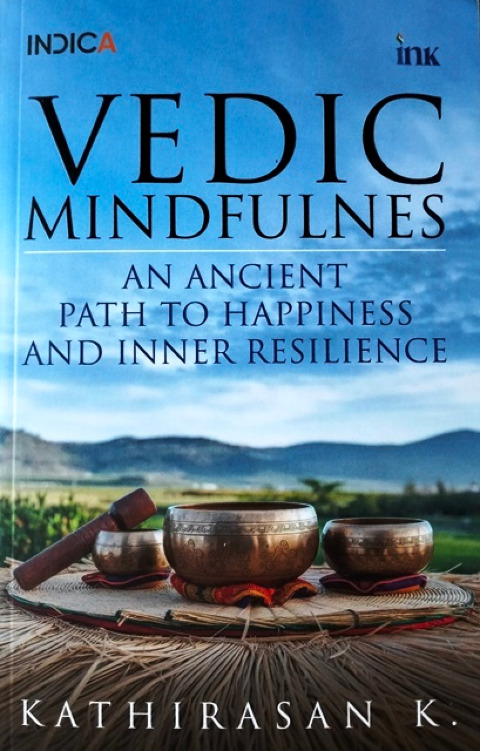
Vedic Mindfulness
Vedic Mindfulness: An Ancient Path to Happiness and Inner Resilience offers a clear, experiential guide that reconnects mindfulness with its roots in the Vedic tradition. Moving beyond stress relief and focus, it presents mindfulness as a way of being—one that refines attention, deepens acceptance, and awakens steady awareness. Structured as a journey of self-inquiry, the book helps you step off autopilot, rediscover the power of pause, and cultivate lasting wellbeing. Drawing on Upanishadic wisdom, karma yoga (skilful action without attachment), and jnana yoga (self-knowledge), it turns everyday activities—walking, eating, working, relating—into opportunities for living meditation. Through stories, metaphors, and practical exercises, you learn to meet life’s highs and lows with equanimity and compassion. Written for both beginners and experienced practitioners, this is not a quick fix but a grounded path to resilience, meaning, and present-moment living. An academic appendix, ‘The Vedic Foundations of Secular Mindfulness’, offers research-based insight into the philosophical lineage behind modern mindfulness.
-
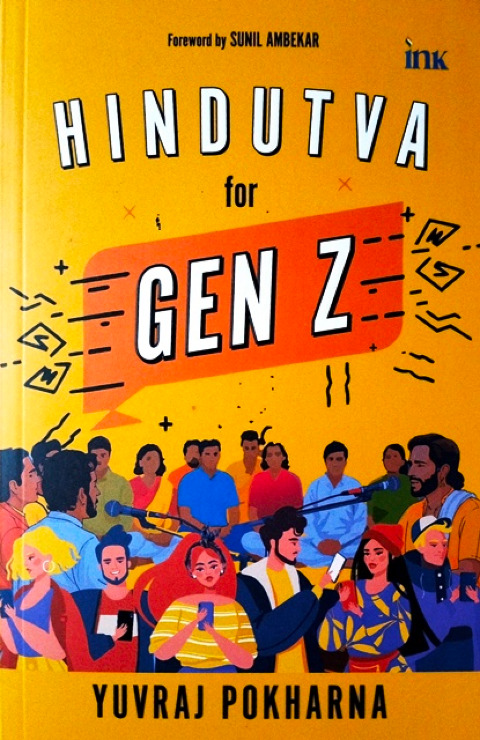
Hindutva For Gen Z
Since 2014, Hindutva has dominated public discourse—across social media, mainstream platforms, and voices ranging from celebrities to politicians. Yet, despite its ubiquity, its meaning and purpose remain widely misunderstood. Interpretations vary sharply: to some, it represents a supremacist ideology; to others, it is a way of life. Caught between these competing narratives is a generation of young people still searching for clarity. Hindutva for Gen Z seeks to bridge this gap. Through clear arguments, relevant citations, and thoughtful analyses, the book offers a concise exploration of Hindutva—its origins, intent, and the debates surrounding it—while addressing and challenging common criticisms. Structured as a collection of essays, the book engages with both ground-level issues—such as temple restoration, place-name changes, and temple taxation—and broader ideological questions, including the nature of Hindutva, the distinction between secularism and pluralism, and the tension between swadeshi and globalization. It also delves into historical perspectives, examining the evolution of Hindutva, Hindu contributions to technological advancement, and the complexities of the caste system. Written in an accessible and relatable style, this book is an ambitious attempt to introduce Gen Z readers to key political, social, and cultural ideas—presented with both clarity and depth.
-
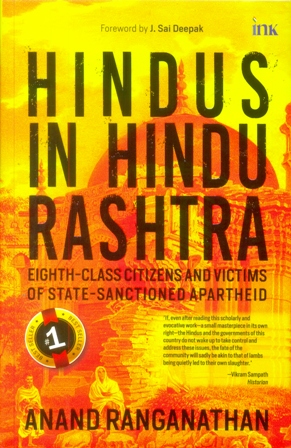
Hindus In Hindu Rashtra
To those who claim we are now living in a totalitarian, fascist, Hindu Rashtra, one must ask: What kind of a Hindu Rashtra is this where a billion-strong Hindus have been, through our parliament, through our courts, our education system, and our constitution, reduced to not just second-class but, rather, eighth-class citizens? What kind of Hindu Rashtra is this where Ram Navami, Hanuman Jayanti, Durga pooja processions, and even Garba celebrations, are attacked and stoned with impunity? What kind of Hindu Rashtra is this where a sitting Prime minister says minorities have the first right to resources? What kind of Hindu Rashtra is this where Hindus are forced to be refugees in their own land, where one can settle 40,000 Rohingya Muslims but not 700,000 Kashmiri Hindus, the land’s original inhabitants; where the judiciary says it is too late to prosecute those who raped, murdered, and ethnically cleansed lacs of Hindus? What kind of Hindu Rashtra is this where Hindu temples are exclusively controlled by the State, where Hindus must beg for Waqf land to celebrate their festival while the government usurps hundreds of thousands of acres of temple land and is responsible for more than 100,000 temples losing lakhs of crores in rental income? What kind of Hindu Rashtra is this where the Right to Education Act discriminates only against Hindus and their schools, forcing tens of thousands of them to shut down? What kind of Hindu Rashtra is this where monsters like Aurangzeb and Tipu who perpetrated large-scale Hindu genocides are eulogised through State sponsored publications, naming of roads and cities, and organising of festivals?
-
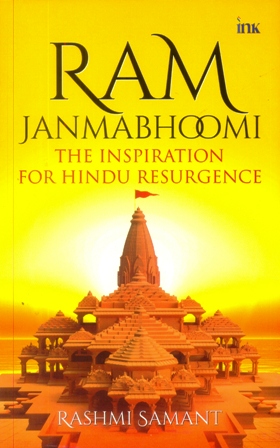
Ram Janmabhoomi-The Inspiration For Hindu Resurgen
A civilization that forgets its struggles is condemned to repeat its mistakes and spiral into a self-destructive cycle. The battles for freedom and the resistance against occupation and atrocities all too often recede from collective memory, overshadowed by the weight of oppression and systematically orchestrated efforts to erase the Hindu identity through manipulated narratives. The sacred geography of Bharat, the cradle of Hindu dharma and the ancestral home of the Hindu people, has borne witness to relentless invasions, leaving scars on the collective psyche. The Ram Janmabhoomi movement stands as a poignant testament to the devastation inflicted upon the roots of Hindu civilization and the arduous battle to reclaim it. In an era dominated by weaponized narratives, where the perpetrators of atrocities are romanticised as victims and the victims are crowned as oppressors, this book reminds of the facts and the inconvenient truths—of the blood, sweat and tears that many Hindus shed in fighting the good fight. It is a call to ensure that every Hindu born in an age, removed from those trials and tribulations, never forgets the sacrifices made by those who went before them. For if we forget, we are complicit in normalising the obliteration of our great civilization.
-
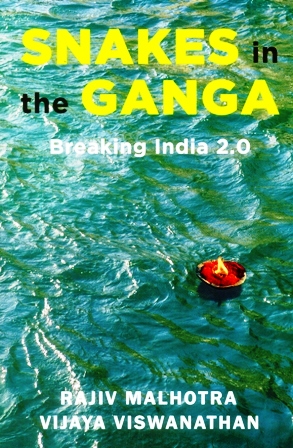
Snakes in the Ganga: Breaking India 2.0
Snakes in the Ganga unveils uncomfortable truths concerning India's vulnerabilities: • Intense warfare against India's integrity is the work of a well-orchestrated global machinery driven by a new ideology. • Marxism has been reincarnated as Critical Race Theory in US academia and serves as the framework to address America's racism. This has been recklessly mapped on to India:Caste is equated with Race. Marginalized communities of India are considered as Blacks and Brahmins as the Whites of India. Groups claiming grievances (like Muslims and LGBTQ+) are artificially clubbed together. • Popularly called the Woke movement, the mission is to dismantle Indian civilization and heritage by waging an uncompromising war against India's government, educational institutions, culture, industry, and society. • Harvard University is Ground Zero of these social theories developed in collaboration with Indian scholars, activists, journalists and artists. This represents a clear and present danger to India's sovereignty and national security. • Several Indian elites are hoisting Harvard as the vishwa guru with their money and family names. Some private universities within India are importing Wokeism that has serious repercussions for India's stability. • Indian corporates are bringing the latest Western rubric of Environmental, Social, and Governance ratings into their workplace. This is aligned with the global Social Justice movement. • China has exploited this latest infrastructure as a passage to India. • Wokeism has penetrated some of the Indian government's policies. For instance, the National Education Policy 2020 is propagating Harvard's liberal arts. • An entire ecosystem of ideologies, institutions and young leaders is emerging for the recolonization of India. Is India for sale?