
-
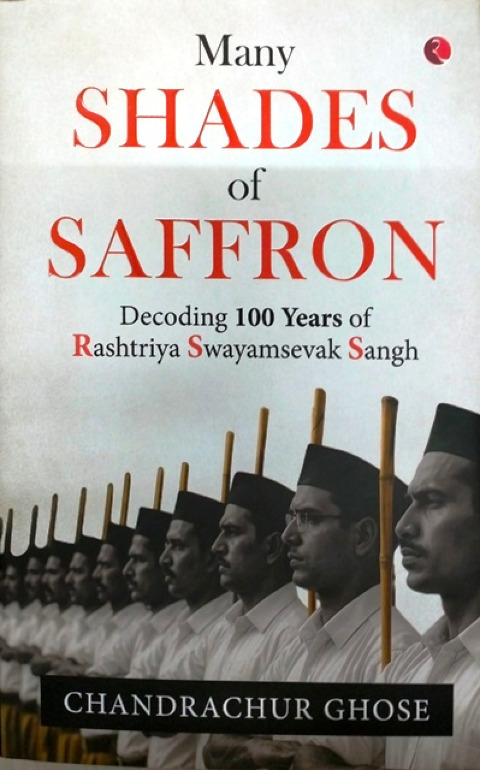
Many Shades Of Saffron
Is the Rashtriya Swayamsevak Sangh (RSS) an upholder of traditional Indian values, or is it a threat to the democratic, pluralist and secular idea of India? A large body of scholarship on the Sangh, its leaders and its activities has emerged in recent decades. However, an overwhelming share of that scholarship reflects a deep ideological division, either being in favour or against the Sangh. T he consequence of this feature of the existing scholarship is twofold. Firstly, most of the literature focuses on specific aspects or periods of the Sangh’s activities, often narrowing down to acts of key leaders interpreted either as heroic or as condemnable. Therefore, many of the Sangh’s activities and parts of its history remain outside the scope of the narrative. The second result flows from the first in a way. It is striking that despite having been around for a century, there is such widespread lack of informed public opinion about the Sangh. The impact of a scarcity of dispassionate narration becomes evident from the prejudiced reaction that the mention of the Sangh evokes. Many Shades of Saffron attempts to bring to readers a fuller story of the RSS and the role it has played in the context of the broader history of the country during the past century. Completing a hundred years by itself can be considered an achievement for any organization, but to have survived and grown in influence by negotiating diverse challenges, particularly official hostility for the most part, makes for a fascinating story. The book traces the leadership styles and visions of the sarsanghchalaks, as well as the attitude of the Sangh to the political developments through different decades and its ideological evolution.
-
Government Doesn't Want You To Know This
From fraudulent forensic reports to dodgy Parliament replies, our Government has resorted to an array of dark maneuvers to block the truth about SUBHAS CHANDRA BOSE’s fate. Now, powered by years of unrelenting research, CHANDRACHUR GHOSE and ANUJ DHAR bring you the cold truth. The man who freed India was alive long after his reported death, a victim of cruel circumstances. Here are the heartbreaking facts Government would not like you to know.
-
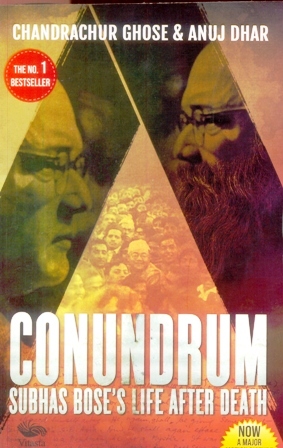
Conundrum
Catastrophic truth about the fate of the man who freed India Sitting in a dilapidated house in a remote part of India, a 74-year-old man narrated in his deep baritone the layout of Jessore cantonment in East Pakistan to his handful of followers. They got the import only a few weeks later when Jessore fell to the advancing Indian Army. This was in December 1971, and Subhas Chandra Bose was officially dead for 25 years. Having spent over 15 years in procuring and scouring through thousands of records from across the world, interacting with eyewitnesses and consulting experts, the authors come to a history-bending conclusion that a mostly unseen, unnamed holy man who lived in various parts of UP from the 1950s to 1985 was Subhas Bose himself. From a “living” Netaji’s throwbacks about his contemporaries, his views on Constitutional issues and India’s foreign policy, to his forays into the world of paranormal and top-secret covert missions across the borders to heart-breaking disclosure why he could not emerge in public — no other book ever written in India is as bold and vast in its scope and implications.