
-
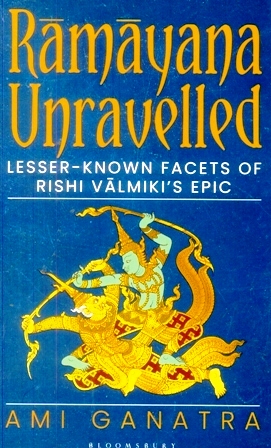
Ramayana Unravelled
No epic has moved the consciousness of millions like the Ramayana. The appeal of the story of Rama is such that it has inspired the imagination of countless storytellers over the centuries, across the length and breadth of the subcontinent. From Jain poets to Bhavabhuti, from Kamban to Goswami Tulsidas, many have retold the Ramayana in their own language, infusing their own unique flavour. Though the story of Rama is much loved and well-known, questions prevail. Ramayana Unravelled attempts to address some key concerns: How did his childhood and youth shape Rama? Why did Rama agree to go on vanvas – was it only to obey his father or was there more to it? How was the relationship of Rama and Seeta? Is the Ramayana inherently misogynist, considering the characterisation of Seeta, Shurpanakha, Kaikeyi and Tara? What led to the downfall of Ravan? Ami Ganatra takes the reader through the events of the Ramayana, resolving conundrums and underlining the reasons the epic continues to be cherished to this day
-
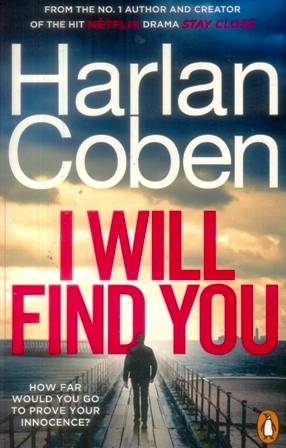
I Will Find You
David and Cheryl Burroughs are living the dream - married, a beautiful house in the suburbs, a three year old son named Matthew - when tragedy strikes one night in the worst possible way. David awakes to find himself covered in blood, but not his own - his son's. And while he knows he did not murder his son, the overwhelming evidence against him puts him behind bars indefinitely. Five years into his imprisonment, Cheryl's sister arrives - and drops a bombshell. She's come with a photograph that a friend took on vacation at a theme park. The boy in the background seems familiar - and even though David realizes it can't be, he knows it is. It's Matthew, and he's still alive.
-
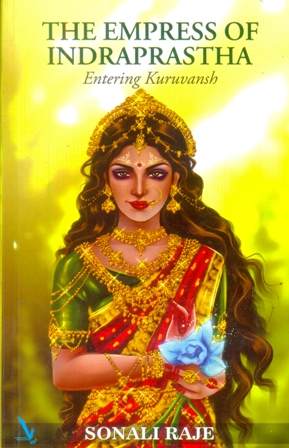
The Empress Of Indraprastha- Entering Kuruvansh
Draupadi’s mother, Maharani Prishati, was influential in building her charismatic daughter’s strong character as a proponent of human rights and a shrewd politician. Why would such an independent thinker blindly follow something that Ma Kunti said accidentally? Did all the Paandav brothers agree to marry her immediately? The brilliant Sahdev and the far-sighted strategist Draupadi collectively argued for a partition to give Duryodhan his rights to half the kingdom. The intricate complexities of a dynamic polyamorous marriage and a sibling bond promoting gender equality are showcased through the series. Over five parts unfurl – the untold memoirs of an Empress…
-
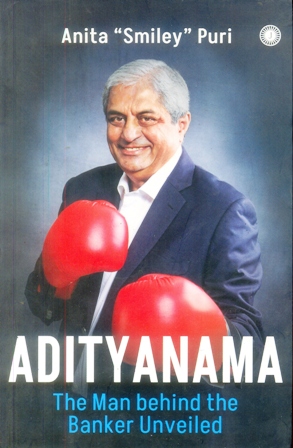
Adityanama-The Man behind the Banker Unveiled
Adityanama offers an exclusive look into the legendary banker Aditya Puri’s life through the eyes of his better half, Smiley Puri. Everyone knows Aditya Puri in the world of finance, but very little is known about the man behind those billion dollar deals and ideas that revolutionised India’s private banking sector. Smiley provides readers a window into the famously discreet banker’s personal life and professional journey dotted with stories revealing Aditya’s sense of humour, his love for food and pranks, his management style, and his commitment to family and friends. She fondly recollects incidents from Aditya’s college life, his Citibank and HDFC Bank years, and his precious moments with her and their children as a true family man. Never-seen-before family photographs from Smiley’s personal collection lend colour to her vibrant narration. This book gives a rare chance to all those who are fascinated with the world of banking and bankers to know what makes the master banker with the Midas touch tick.
-
Istanbul Istanbul
Istanbul is a city of a million cells and every cell is an Istanbul unto itself Below the ancient streets of Istanbul,four prisoners—Demirtay the student,the doctor,Kamo the barber and Uncle Küheylan—sit,awaiting their turn at the hands of their wardens.When they are not subject to unimaginable violence,the condemned tell one another stories about the city,shaded with love and humor,to pass the time. Quiet laughter is the prisoners balm,delivered through parables and riddles. Gradually, the underground narrative turns into a narrative of the above-ground. Initially centered around people,the book comes to focus on the city itself.And we discover there is as much suffering and hope in the Istanbul above ground as there is in the cells underground. Despite its apparently bleak setting, this novel—translated into seventeen languages—is about creation,compassion and the ultimate triumph of the imagination.
-
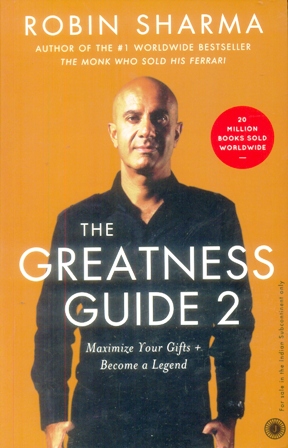
The Greatness Guide 2
The Greatness Guide 2 is a sequel to the international bestseller The Greatness Guide. This book talks about 101 additional ways to make life better and achieve the greatness that one seeks.Filled with simple writing, illustrative,examples and true life happenings, this book takes readers through the process of creating a path that reaches the next level in life. The book reveals the 101 paths.Each path is detailed for readers to understand the ultimate goal. Remarkable insights and tools guide readers with advice to attain personal success.The insight provided in the book elevates readers,energizing them to move toward a better life.It explains the tools needed to lead an intense life and how to become a cool brand. The 101 lessons teach one to work and live well in a simple,yet powerful,manner and encourages readers to take the step towards being world class.This book is used in corporate training, personal training and in business schools.It attempts to instill confidence in the reader and provides the tools to reach a greater level in life.The Greatness Guide 2 is popular among young executives and entrepreneurs.This first edition of the book was published by Jaico Publishing House in the year 2008. It is available in paperback.Key Features: The book is popular like its prequel,The Greatness Guide.It has vivid illustrations that explain the 101 paths to being world class.
-
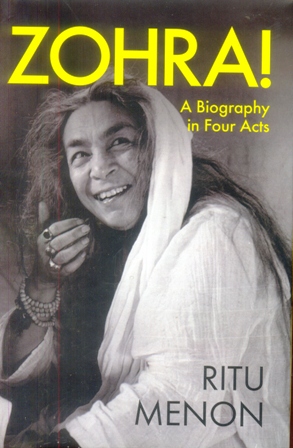
Zohra - A Biography In Four Acts
zohra Segal (1912-2014) spanned an Indian century of the arts and became the only woman to make a mark in all the performing arts, with the exception of music, within the country and abroad. This elegant biography traces her remarkable journey.born into a family with connection to the nawabs of Rampur, zohra mumtazullah Khan chose adventure over tradition when she was eighteen, travelling to Germany to learn modern dance. For the rest of her life, she continued to defy Convention and was associated with transformative initiatives in the arts. In 1935, she was recruited by the bohemian genius Uday Shankar and toured the world with his dance troupe, until he disbanded it. In 1943, she set up a unique dance school in Lahore with her husband kameshwar Segal, eight years her Junior. In Bombay two years later, she joined Prithvi theatres, founded by the legendary Prithviraj Kapoor. For the next fourteen years she travelled across India, taking socially relevant plays directly to the people—through the turbulence of Partition and the heady idealism following independence, and the tragedy of kameshwar’s suicide.In 1962, zohra went to London on a drama scholarship and stayed on for twenty-five years, becoming part of a tiny band of Asian artistes who would change the complexion of British theatre. From here to her participation in pioneering TV series and films like doctor Who, jewel in the crown and Bhai on the beach was a natural progression.Back in India, she was surprised to find Bollywood at her door when she was well past eighty. Playing the unconventional grandmother—by turns charming and crusty—she became a household name.In this biography of the unlikely star, Ritu Menon helps us understand both the performer and the person, and the times she lived in.
-
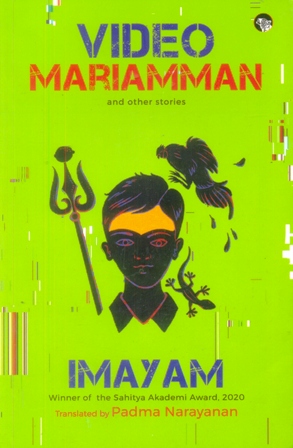
Video Mariamman And Other stories
in his path-breaking fiction, The acclaimed Tamil writer I may am has written about the brutal complexities of the caste system and patriarchy in unadorned, powerful prose. Video mariamman is a collection of fourteen of his finest stories poonkothai goes looking for her daughter who has eloped with a ‘low-caste’ man, hoping to give the daughter her Certificates and some money so that she can lead a decent life. The ‘stolen girl’, born into a family of black magicians and abducted when she had barely reached puberty, grows up to be a tough survivor who lives life entirely on her own terms. Srinivasan, a police Constable, tormented after being a pallbearer for a Dalit corpse and horrified by its implications for his social status, decides to quit his job. Chandravadanam, a music prodigy, dies, and kalaiammal, who brought her up without ever entering her house, mourns her death and curses the man for whom she gave up her youth and music. . In these and ten other stories—translated by Padma Narayanan with great skill and sensitivity proves why he has been hailed as a writer with few equals anywhere, for his deep humanism and fierce sense of justice
-

Practical Ayurveda
Practical Ayurveda' gives an excellent introduction to the system of Ayurveda in a concise, direct and easy to understand manner. The book provides constitutional test with useful methods for self diagnosis and balancing the humors. It discusses the health benefits of good sexual relationships, clarifies the spiritual principles and provides a broad and flexible perspective on this ancient healing system.
-
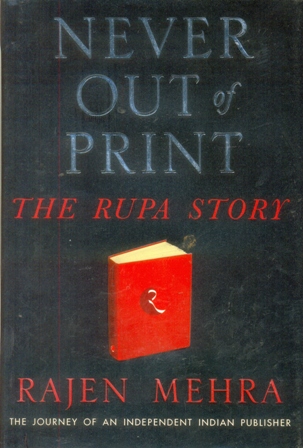
Never Out Of Print-The Rupa Story
Rupa began on a Calcutta pavement in 1936, when D. Mehra, an impecunious but driven salesman, decided to try his hand at selling books. Within a generation, he had established Rupa as a major purveyor of imported books. Successive generations would make the firm the country's leading distributor of English-language trade books, representing some of the world's most important publishers, including Penguin, HarperCollins, Faber and many more. As the company grew, it began publishing its own titles. Legendary film-maker Satyajit Ray designed the publishing house's first colophon and became one of its earliest patrons. Other notables on the Rupa list included sportsmen like Sunil Gavaskar, whose memoir, Sunny Days, gave it one of its bestsellers; Chetan Bhagat, who would go on to become India's largest-selling author within a few years; and Ruskin Bond, the country's most beloved writer. Over the decades, as the Indian publishing milieu was reshaped by new entrants from around the world, Rupa continued to maintain its position as a fiercely independent publisher of important books, at the forefront of the Indian publishing scene.
-
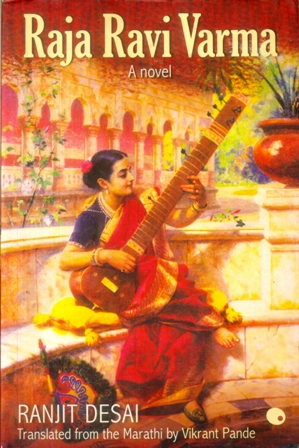
Raja Ravi Varma
A controversial novel based on the life of India's most celebrated painter, Raja Ravi VarmaHe was accused of making the gods look like humans and insulting them by portraying them in the nude. He countered that he saw divinity in both gods and humans, and that nudity was the purest form he knew. This is the story of a little boy who grew up making charcoal sketches on freshly whitewashed temple walls and went on to be titled in the court of Thiruvananthapuram as 'Raja' for his artistic prowess. His painting of a Nair woman who worked in his wife's palace brought him wrath and recognition alike. His deep involvement with Sugandha, the Maharastrian lady, who became Menaka, Damayanti and Urvashi in his most acclaimed works caught the fancy of many critics and admirers.
-
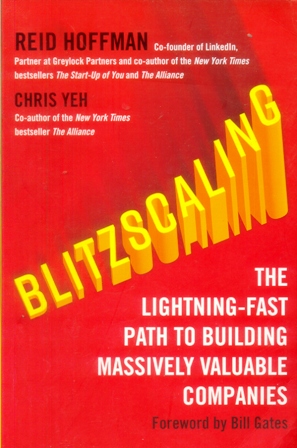
Blitz Scaling
From the authors of New York Times bestsellers, The Alliance and The Start-up of You, comes a smart and accessible must-have guide for budding entrepreneurs everywhere.Silicon Valley is renowned for its striking number of businesses which have grown from garage start-ups into global giants; Apple, Cisco, Google, HP and Intel to name a few. But what is the secret to their outstanding success? Hoffman and Yeh explain that it’s simple: they’ve learnt how to blitz scale.Featuring case studies from numerous prominent tech businesses such as AirBnB and WeChat, this book offers a specific set of practices for catalysing and managing dizzying growth in bourgeoning start-ups. Prioritising speed over efficiency in an environment of uncertainty, Blitz scaling illustrates how businesses can accelerate to the stage in a company’s life cycle where the most value is generated. Using the framework provided by Hoffman and Yeh, readers will learn how to design business models which simultaneously support growth at a furious pace and capture the market, as well as how to navigate thenecessary shifts in strategy needed at each level of scale.
-
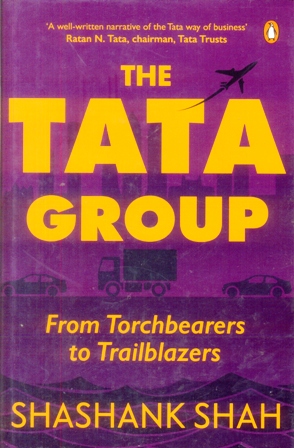
The Tata Group
With over 100 companies offering products and services across 150 countries, 700,000 employees contributing a revenue of US$ 100 billion, the Tata Group is India's largest and most globalized business conglomerate. The Tatas are known for salt, software, cars, communications, housing, hospitality, steel and gold. But how did they come so far? How did they groom leadership, delight customers, drive business excellence and acquire global corporations? How did they maintain a brand and corporate values that are considered the gold standard? A deepdive into the Tata universe, The Tata Group brings forth hitherto lesser-known facts and insights. It also brings you face-to-face with the most intriguing business decisions and their makers. How did Tata Motors turn around Jaguar Land Rover when Ford failed to do so? Why wasn't TCS listed during the IT boom? Why wasn't Tata Steel's Corus acquisition successful? This definitive book tells riveting tales and provides insider accounts of the adventure and achievement, conflict and compassion, dilemmas and decisions of dozens of Tata companies. The result of over a decade of rigorous research and interviews with more than a hundred leaders at Tata, this book decodes the Tata way of business, making it an exceptional blend of a business biography and management classic.
-
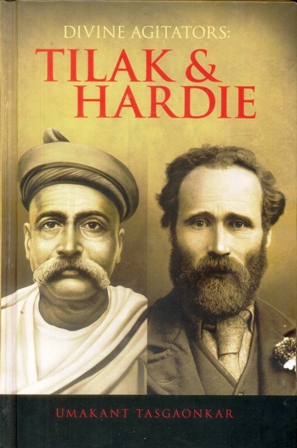
Divine Agitators : Tilak & Hardie
Take a trip back in time to meet historical figures like James Keir Hardie and Bal Gangadhar Tilak, who challenged the establishment and wrought radical changes. Author Umakant Tasgaonkar brings to life the thrill of the fight for political freedom as Hardie fought for social and racial equality and Tilak fought for self-rule. But these radical ideas came with a heavy price! Discover the roots of political conflict and the evolution of ideas that have shaped the world we live in today.
-
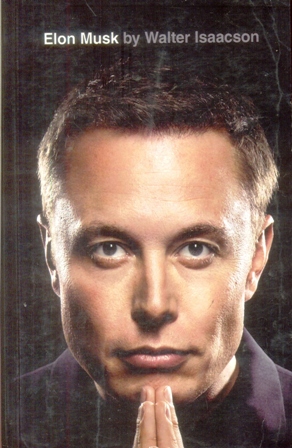
Elon Musk
When Elon Musk was a kid in South Africa, he was regularly beaten by bullies. One day a group pushed him down some concrete steps and kicked him until his face was a swollen ball of flesh. He was in the hospital for a week. But the physical scars were minor compared to the emotional ones inflicted by his father, an engineer, rogue and charismatic fantasist. His father’s impact on his psyche would linger. He developed into a tough yet vulnerable man-child with an exceedingly high tolerance for risk, a craving for drama, an epic sense of mission, and a maniacal intensity that was callous and at times destructive. At the beginning of 2022 – after a year marked by SpaceX launching thirty-one rockets into orbit, Tesla selling a million cars, and him becoming the richest man on earth – Musk spoke ruefully about his compulsion to stir up dramas. ‘I need to shift my mindset away from being in crisis mode, which it has been for about fourteen years now, or arguably most of my life,’ he said.
-
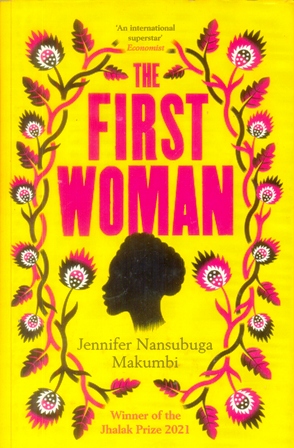
The First Woman
'Jennifer Makumbi is a genius storyteller.' Reni Eddo-Lodge An intoxicating mix of Ugandan folklore and modern feminism, from a multi-award-winning author As Kirabo enters her teens, questions begin to gnaw at her – questions which the adults in her life will do anything to ignore. Where is the mother she has never known? And why would she choose to leave her daughter behind? Inquisitive, headstrong, and unwilling to take no for an answer, Kirabo sets out to find the truth for herself. Her search will take her away from the safety of her prosperous Ugandan family, plunging her into a very different world of magic, tradition, and the haunting legend of 'The First Woman'.
-
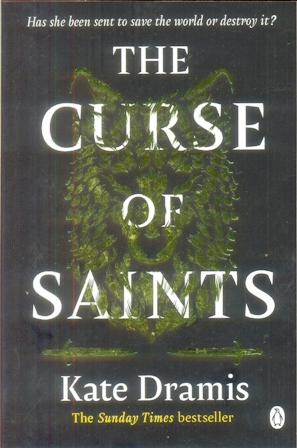
The Curse Of Saints
Has she been sent to save the realm or destroy it? As Spymaster to the Queen, Aya's blood oath ensures she protect those she fights alongside - including Will, the Queen's Enforcer and Aya's bitter rival. When rumours of a rise in dark magic spreading in a nearby kingdom, both are sent to investigate. But when Aya's power acts beyond her gods-given affinity, she risks being turned into a weapon in a war she doesn't know how to win. And when her relationship with Will unexpectedly shifts, neither know the danger that will follow.
-

The Shepherd
Christmas Eve, 1957. For one Royal Air Force pilot, one last hurdle remains between himself and a cozy Christmas morning in England. A sixty-six-minute flight in his Vampire fighter plane from Germany to Lakenheath. A routine flight plan and a full tank of fuel. What could go wrong? But as the fog begins to close in, the compass goes haywire and the radio dies, leaving him in silence, lost and alone up in the inky black sky. All hope seems lost as he accepts his fate when, out of nowhere, a vintage fighter-bomber appears and is miraculously trying to make contact. For one lonely pilot this is a miracle, but really the mystery has just begun ...
-
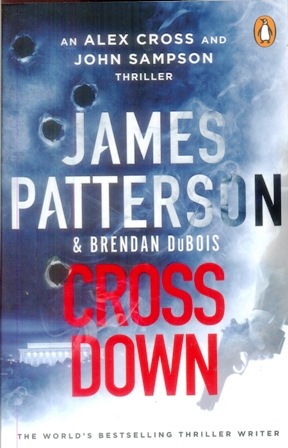
Cross Down
With the country in chaos and corruption on all sides, there's only one person to turn to. When a series of military-style attacks erupt across the United States, Detective John Sampson is called in to investigate. The attacks are untraceable, with patterns too random to decipher, leaving Sampson struggling to find a link amongst the carnage. As Sampson discovers a lead through an ex-military contact, his partner Alex Cross is brutally side-lined, leaving him certain about one thing: he can trust no one. With soldiers called on secret assignments and others mysteriously disappearing, Sampson must revisit his military past if he's to save his country's future.
-
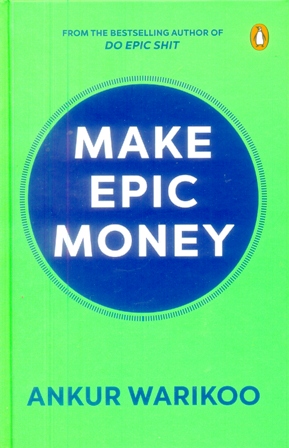
Make Epic Money
In his groundbreaking book Do Epic Shit, Warikoo dropped this truth bomb: ‘Three relationships determine our life's course - time, money, and ourselves.’ Now, in his third book, Make Epic Money, he dives deep into the complex world of money to provide you with the ultimate personal-finance blueprint. Drawing on a lifetime of experience of financial highs and lows, he shares everything he has learnt about money that he wishes someone had taught him when he was young. Prepare to unlock the secrets to financial well-being with this no-nonsense guide. Say goodbye to confusing jargon and hello to practical advice. Discover how to earn, spend and make your money work just as hard for you as you do for it.
-

Glimmers Of You (The Lost & Found Series Book 3)
He hadn’t always just been my brother’s best friend. There was a time when he was mine, too. Until he disappeared from our small town when I needed him the most. Now, Caden’s back. With his cocky smirk and infuriating nicknames. And I’m struggling to ignore his presence. When my ex refuses to leave me alone, Caden steps in, suggesting that it will get my ex and Caden’s calculating father off both our backs if we just pretend to be madly in love. There’s just one problem… Nothing I feel for Caden Shaw is fake—even when I thought I hated him. And there’s no denying how the touch of his lips sparks a flame I’ll never be able to extinguish. As those pretend moments start to turn oh so real, someone’s watching. They’re not happy about Caden’s new role in my life. And they’ll do anything to rip me away from him—even burn us all to the ground…
-

Echoes Of You (The Lost & Found Series Book 2)
Nash Hartley has always been my everything: Protector. Partner in crime. Best friend. The person who was there for me in my darkest hour. But my heart wanted so much more. So, when I knew for certain Nash didn’t feel the same about me, I tried to move on. What a mistake that turned out to be. Now, I’m back in our small town, desperate to escape my living nightmare, and the only person I want to see is him. As secrets are revealed, and Nash finds out what happened to me, he’ll do anything to keep me safe. But there are those who will do anything to stop him, and this time neither of us may make out alive…